
Put three used samples on a shelf: a bottle with a peeling mark, a shirt with a cracked print and a notebook whose coating has rubbed away. A useful branded merchandise durability testing checklist starts with those likely failures, not a generic promise that an item is “high quality”. Define how recipients will use, wash, carry and store each product; convert those conditions into repeatable test cards; then agree what evidence will trigger release, rework or a product change. Development tests should expose weaknesses. Production-lot checks should confirm that the approved result was reproduced.
This approach gives procurement, marketing and suppliers the same decision language before volume production begins.
Read the failure shelf before choosing a test
Durability is not one property. A product may remain functional while its branding fails, or look acceptable while a closure, seam or hinge no longer works. Start by naming what would disappoint the recipient or damage the campaign.
A bottle used at a conference might be handled repeatedly, packed beside a laptop and washed after the event. A cotton T-shirt may be worn weekly and laundered with ordinary household loads. A presentation box may only travel once, but scuffing at the corners can make it look poor before it is opened. These are different exposure patterns, so the same “ten-cycle test” would be arbitrary.
For each item, separate four questions:
- Does the base product still perform its intended function?
- Has the decoration remained legible, attached and appropriately coloured?
- Has the surface, trim or packaging changed in a way recipients will notice?
- Is the observed change acceptable for the expected service life and price tier?
This is deliberately narrower than selecting a print process. The related guide to branded merchandise decoration methods helps compare techniques before sampling. Durability testing determines whether the chosen product, finish and process survive the particular use case.
Write the use profile in observable terms
“Normal use” is too vague for a test instruction. Write a short use profile that another person could reproduce without guessing. Include the exact product version, substrate, coating, decoration location and known care instructions. Then describe the exposures that matter.
Frequency and service life
State whether the item is intended for a one-day event, a three-month onboarding period or repeated use over a year. A low-cost event tote and an executive travel accessory should not inherit the same expectation simply because both carry a logo.
Handling and contact
Identify contact with hands, bags, desks, zips, keys, liquids or cleaning materials. On a notebook, edge and spine wear may be more important than a broad rub across the centre. On a bottle, the grip zone may receive far more contact than the rear surface.
Washing and care
For textiles, define the wash and drying procedure rather than writing “machine washable”. ISO 6330:2021 specifies domestic washing and drying procedures for textile testing, while ISO 105-C06:2010 covers colour fastness to domestic and commercial laundering. These standards can make a procedure reproducible; they do not decide the campaign’s acceptable appearance or service life. The buyer still has to set the pass criterion.
Environment and transport
Record temperature, moisture, sunlight and compression risks where they are plausible. Avoid inventing extreme exposures merely to make a test look demanding. A useful stress test represents a foreseeable condition or deliberately explores the product’s margin.
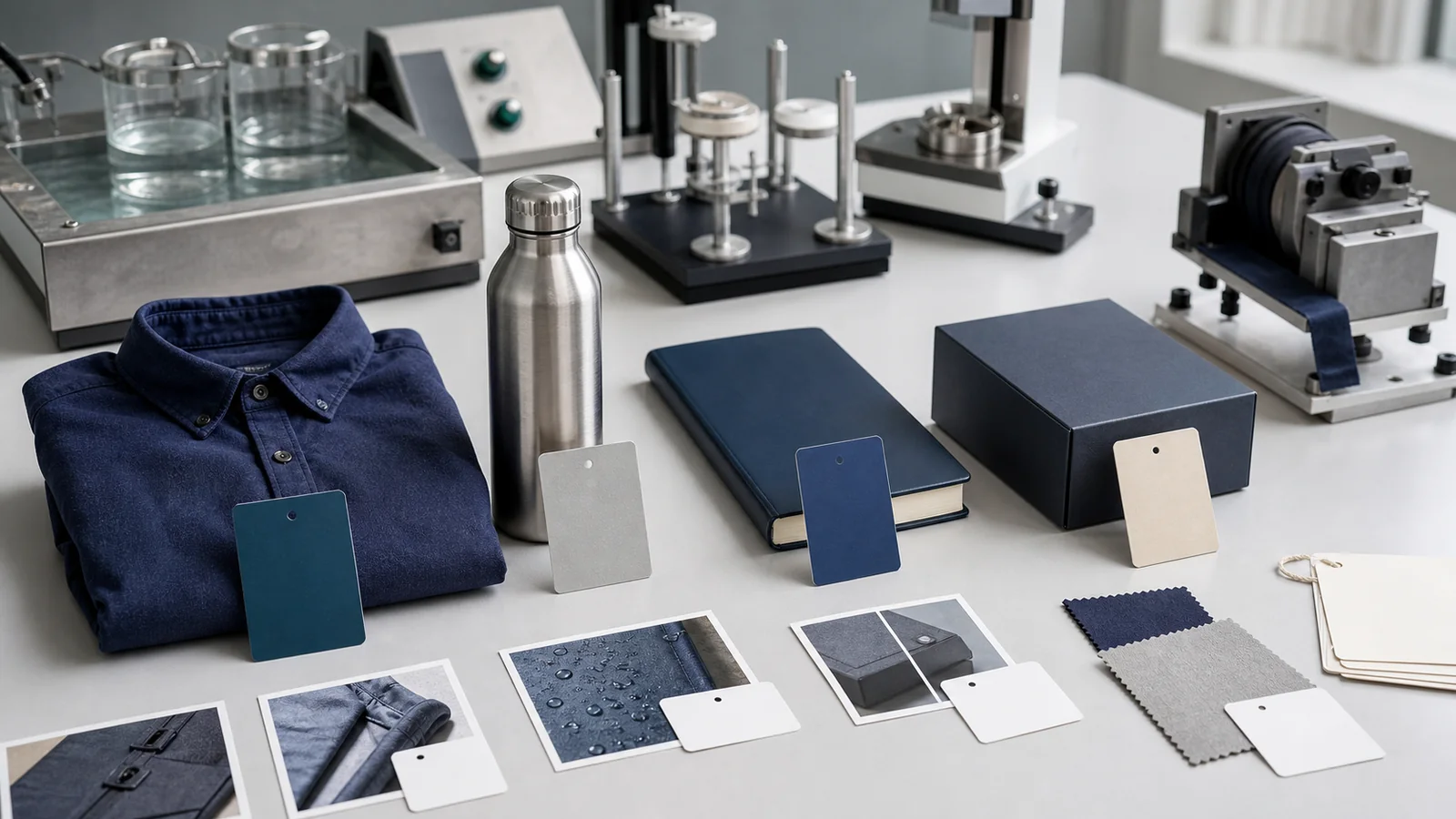
Build one test card for each important failure mode
A test card is a controlled instruction and evidence record. It prevents a supplier, agency and buyer from running three different tests under the same name. One card should cover one failure mode or a tightly related group.
Each card needs:
- specimen identity, including sample version and decoration batch;
- exposure method, equipment or manual action;
- cycle count, duration and inspection intervals;
- conditioning or recovery period where appearance may change after testing;
- failure mode being assessed;
- pass, review and fail criteria;
- photograph position, lighting and file-naming convention;
- person responsible for testing and person authorised to decide.
The criteria should be visible and operational. “No significant damage” invites argument. A better instruction might require the mark to remain fully legible with no lifted edge visible at the agreed viewing distance, while any functional leak is an automatic failure. Exact thresholds must suit the material, technique and programme; do not copy numbers from a different product.
| Item and use profile | Failure to investigate | Development test | Production decision evidence |
|---|---|---|---|
| Weekly-washed cotton shirt | Cracking, colour loss, distortion | Defined wash/dry sequence with inspections at agreed intervals | Approved reference beside lot specimens under consistent light |
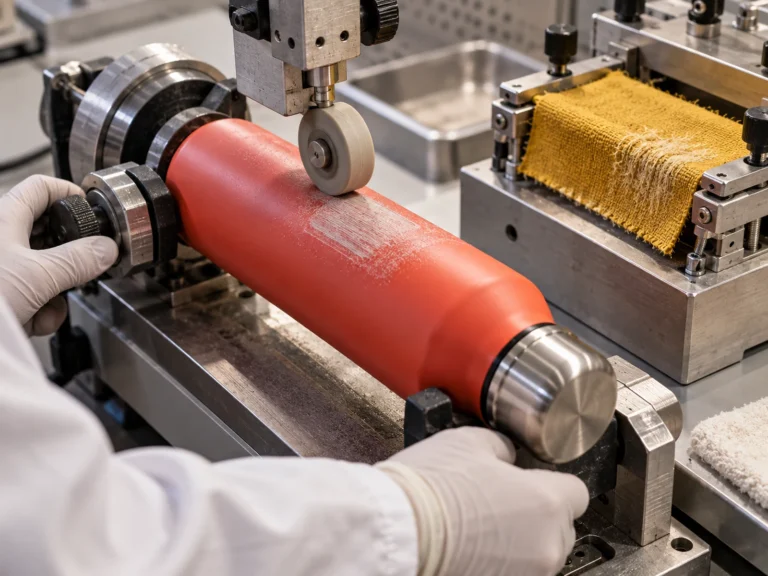
| Commuter bottle carried in a bag | Decoration wear, coating rub, leakage | Handling/rub exposure plus closure and leak checks | Lot samples show acceptable mark and functional closure |
| Daily-use coated notebook | Edge wear, surface transfer, binding weakness | Repeated handling at spine and edges; opening cycles | Photos and observations tied to sampled carton and batch |
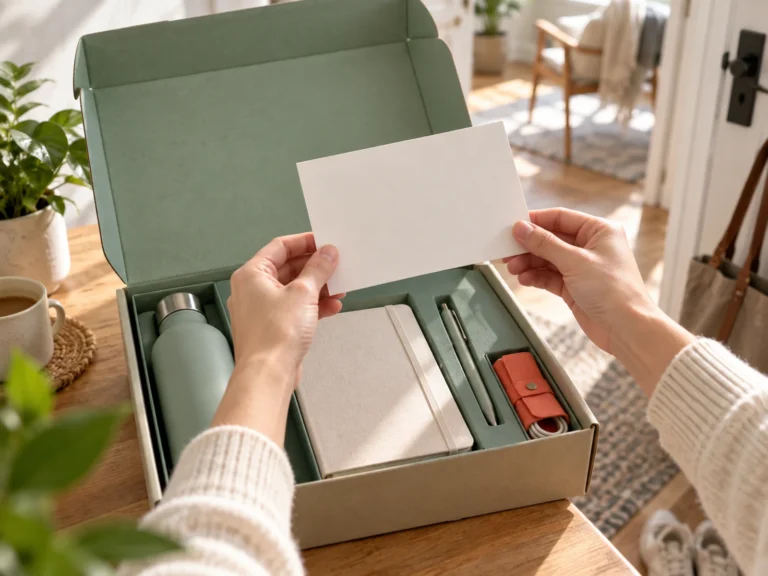
| One-event presentation box | Corner crush, scuffing, insert movement | Packed transport simulation based on actual route | Packout specimen matches approved construction and presentation |
An adhesion method also has a defined scope. ASTM D3359-23 describes tape tests for rating coating adhesion to metallic substrates and notes important limitations, including that the result is not an absolute measure of adhesion force. It should not be treated as a universal test for every printed gift. Use a method only when its substrate, purpose and interpretation fit the product.
Separate development stress tests from lot acceptance
Development asks, “Where does this combination begin to fail?” Lot acceptance asks, “Did production reproduce the approved combination?” Mixing the two creates avoidable disputes.
During development, seek the margin
Test the product-decoration-packaging system early enough to change it. Compare credible alternatives, inspect at intervals and retain the failed specimens. A failure is useful if it arrives before the purchase order locks material, process and quantity.
Before production, lock the reference
The signed sample, approved artwork, colour reference, test cards and approved tolerances should form one release package. The corporate gift sample approval checklist explains how to stop an attractive sample from becoming an ambiguous production instruction.
For the production lot, verify reproduction
Lot checks should use traceable specimens and a sampling plan suited to the risk. ISO 2859-1:2026 provides acceptance-sampling procedures indexed by acceptance quality limit for discrete lots. It does not replace buyer-defined defects or make every attribute suitable for sampling. High-consequence functions, personalisation and safety-relevant requirements may need different controls or complete verification.

Run the decision on a representative 600-kit programme
Consider a marketing team preparing 600 launch kits with a lightweight jacket, coated bottle, notebook and rigid presentation box. The first prototype looks consistent in a meeting room, but the team expects recipients to commute with the bottle and wear the jacket through an autumn campaign.
The jacket card therefore defines a realistic laundering sequence and evaluates both garment behaviour and decoration. The bottle card concentrates on the grip area, bag contact, closure function and leakage. The notebook card checks edge wear and binding because those are the first surfaces likely to deteriorate. The box is assessed as a packed system, not as an empty shell.
Early testing shows that the bottle mark begins to lift at one edge, while the jacket and notebook meet their agreed criteria. Procurement does not reject the entire kit or accept the issue as “minor”. The team records the failure, compares a revised decoration or product surface, repeats the affected card and preserves the other approvals. When production starts, lot samples are checked against the locked references rather than pushed through a more aggressive development test without explanation.
This decision trail also improves corporate gift supplier due diligence: capability claims are supported by named specimens, methods and records, not a broad assurance.
Keep evidence attached to the decision
Photographs are useful only when they identify what was tested and under what conditions. Use the same lighting, distance and orientation for before-and-after views. Include a scale or reference where size matters, and do not use image enhancement that hides or exaggerates defects.
Retain the test card, raw observations, images, specimen code, artwork version and decision together. Record deviations: a substituted tape, different wash programme or shorter conditioning period can change interpretation. If the supplier performed the test, procurement should still know who ran it and whether the buyer witnessed, repeated or independently verified any part.
The record should lead to one named action, not end with “noted”. Common outcomes are:
- release the approved construction and criteria to production;
- rework the process and repeat only the affected test set;
- change product, substrate or decoration method;
- adjust the stated care or service-life expectation, provided it remains useful and honest;
- stop the item when no credible correction fits the budget or timeline.
Release, rework or change—before volume hides the problem
A durability plan is successful when it supports a timely procurement decision. Begin with real recipient use, make each likely failure observable, keep development stress work separate from lot acceptance and attach evidence to the approved reference. That gives marketing a clearer promise, suppliers a reproducible instruction and quality teams a defensible release gate.
For a new international programme, LUGVO corporate gifting services and the LUGVO services team can help connect product sourcing, customisation, sampling, packaging and delivery. Bring the likely failure modes into the first specification discussion; testing them before full production is far less disruptive than explaining them after distribution.


 English
  Español
  Français
  العربية
  Italiano
  Deutsch
  日本語
日本語  Nederlands
  Svenska
  Norsk bokmål
  Dansk
Dansk  Suomi
Suomi  한국어
한국어  Ελληνικά
  עִבְרִית
  Română
  Türkçe
  Русский