
Il y a un tiroir particulier dans presque tous les bureaux, cuisines ou couloirs d'appartement. Vous le connaissez. Il est rempli de stylos au hasard, de vieux cordons de conférence, de décapsuleurs, de sacs fourre-tout d'événements dont vous vous souvenez à peine, et peut-être d'une balle anti-stress en forme de fruit pour des raisons que personne ne peut expliquer.
Ce tiroir dit la vérité sur les produits de marque.
Une partie reste. La plupart ne le sont pas.
La différence n'a généralement rien à voir avec la taille du logo, l'intensité des couleurs de la marque ou le nombre d'articles commandés par une entreprise avant un salon professionnel. Les produits de marque que les gens conservent ont tendance à être utiles, beaux, bien faits ou étrangement personnels. Ils s'intègrent dans la vie de tous les jours sans exiger trop de la personne qui les utilise.
C'est le point idéal.
Dans un monde où les gens font constamment défiler les publicités, mettent en sourdine les articles sponsorisés et sautent tout ce qui semble trop vendeur, les articles de marque physiques ont encore un avantage humain surprenant. Ils peuvent s'asseoir sur le bureau de quelqu'un, l'accompagner à la salle de sport, porter ses courses au marché ou devenir le sweat à capuche qu'il prend tous les dimanches matins sans y penser.
Mais seulement s'ils sont bien faits.
Pourquoi les produits de marque fonctionnent toujours dans un monde numérique
Il est facile de supposer que tout ce qui est significatif dans le marketing se passe désormais en ligne. Les campagnes sur les médias sociaux, les flux d'e-mails, la recherche payante, les partenariats avec les influenceurs, les annonces de reciblage - tout cela est important, c'est certain. Mais le marketing numérique est également bruyant. Les gens sont surchargés. L'individu moyen voit probablement plus de contenu de marque avant le petit-déjeuner que ses grands-parents en une semaine.
C'est là que les marques marchandise est différent.
Un objet physique ne disparaît pas au bout de deux secondes. Il ne dépend pas d'un algorithme. Il n'a pas à se battre pour attirer l'attention dans un fil d'actualité entre des photos de vacances, des arguments politiques et la mise à jour d'un starter de levain de quelqu'un.
Une bonne tasse fait partie du rituel du matin. Une casquette confortable est emportée pour le week-end. Un carnet de notes élégant se retrouve dans les réunions, les cafés, les aéroports et les comptoirs de cuisine. Ces objets traversent tranquillement la vie de quelqu'un.
Et c'est important.
Les meilleures marchandises de marque n'interrompent pas les gens. Ils les accompagnent.
Il s'agit là d'une distinction majeure. Personne n'a envie d'une nouvelle publicité qui s'incruste dans sa journée. En revanche, les gens apprécient les objets qui sont réellement utiles, beaux, pratiques ou amusants. Lorsqu'une marque offre à quelqu'un un article qui s'intègre naturellement dans son mode de vie, elle gagne un peu de place dans l'univers de cette personne.
Pas de manière bruyante. D'une manière familière.
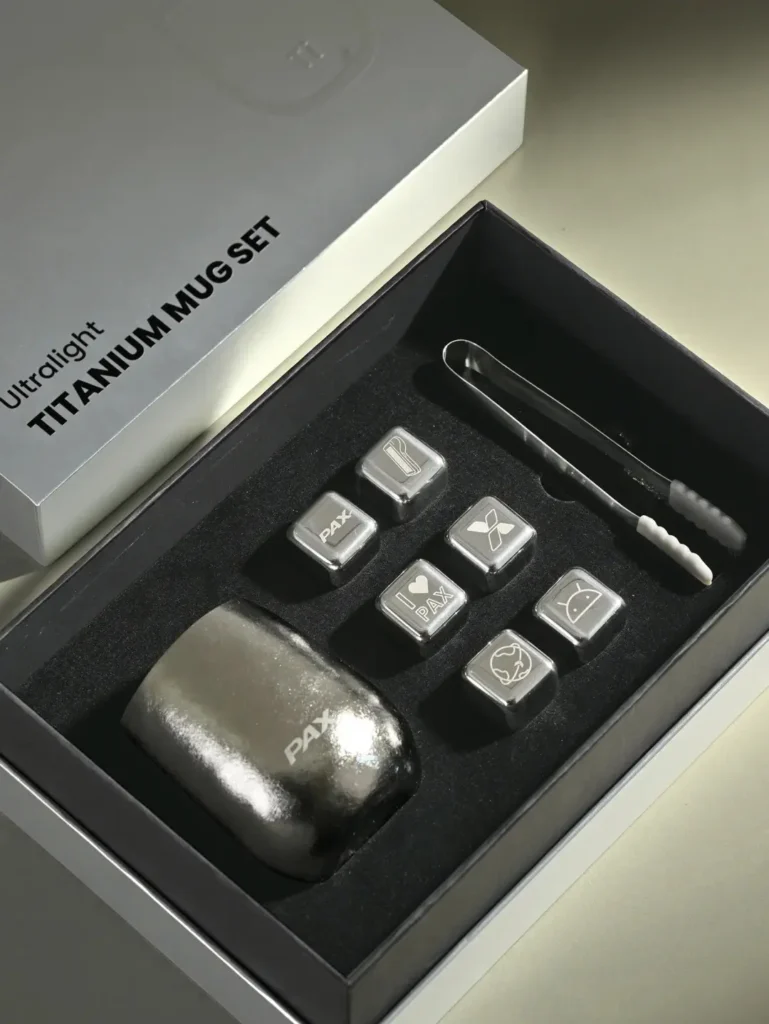
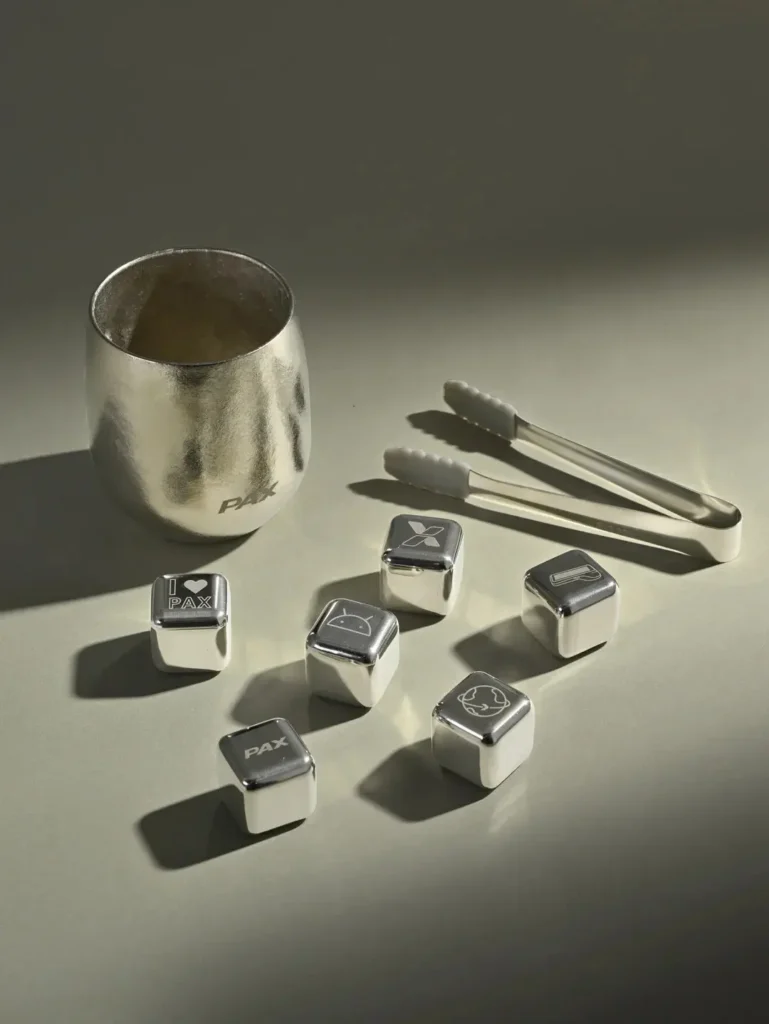
La nouvelle norme pour les marchandises de marque
Pendant des années, les produits de marque ont eu la réputation d'être bon marché. Pas toujours, mais assez souvent. Pensez aux T-shirts qui grattent, aux stylos en plastique qui ne fonctionnent plus après deux utilisations, aux bouteilles d'eau qui ont un vague goût de fabrication et aux sacs fourre-tout dont les poignées cèdent dès que vous y mettez quelque chose de plus lourd qu'une barre de céréales.
Les gens font preuve de plus de discernement aujourd'hui.
Ils se soucient de la qualité. Ils se soucient du design. Ils se soucient de la durabilité. Ils remarquent si quelque chose leur semble réfléchi ou précipité. Et sur de nombreux marchés, en particulier en Amérique du Nord et en Europe, les gens sont de plus en plus mal à l'aise avec le gaspillage déguisé en promotion.
Cela signifie que la vieille approche consistant à apposer un logo sur n'importe quoi ne tient plus la route.
Aujourd'hui, les marchandises de marque doivent satisfaire à des exigences plus élevées :
- Est-ce que quelqu'un achèterait ce produit s'il n'y avait pas de logo dessus ?
- Est-il agréable à utiliser ?
- Correspond-il au style de vie du public ?
- L'image de marque est-elle suffisamment subtile pour donner l'impression d'être élégante ?
- Le produit est-il fabriqué de manière responsable ?
- Le projet durera-t-il plus longtemps qu'un seul événement ?
Ces questions sont importantes car les produits de marque ne sont plus de simples cadeaux. Ce sont de minuscules expériences de marque. Chaque détail communique quelque chose.
Un fourre-tout fin et fragile dit une chose. Un fourre-tout en coton recyclé durable au design épuré en dit tout autrement.
Un carnet bon marché qui tombe en morceaux envoie un message. Un journal bien relié qui se sent bien dans la main en envoie un autre.
Les gens n'analysent peut-être pas consciemment tout cela, mais ils le ressentent.
Produits de marque et mode de vie quotidien
Les produits de marque les plus efficaces n'ont généralement pas l'air d'être des produits de marque. Il s'agit plutôt d'un produit qui a sa place dans une vraie journée.
Imaginez un travailleur à distance qui commence la matinée avec un café dans une tasse en céramique sur laquelle est imprimé un petit logo près de la base. Elle n'est pas tape-à-l'œil. Elle est simplement jolie sur le bureau, à côté d'un ordinateur portable et d'un carnet de notes à moitié ouvert.
Ou quelqu'un qui se promène dans l'est de Londres, à Brooklyn, à Amsterdam ou à Melbourne avec un sac en toile qui porte la marque d'un fabricant. Le sac est solide. Le design est minimal. Il s'accorde avec un jean, un manteau de laine, des baskets ou tout ce que la personne a enfilé avant de quitter la maison.
C'est l'angle du mode de vie.
Les produits de marque fonctionnent mieux lorsqu'ils comprennent la façon dont les gens vivent réellement. Non pas la version polie de la photo d'archives, mais la vraie vie : les trajets quotidiens, les voyages, le travail à domicile, la préparation du café, les séances de Pilates, les courses, la préparation des bagages pour les conférences, l'accompagnement des enfants à l'école, les réunions entre amis après le travail.
Si un objet peut se glisser naturellement dans ces moments, il a beaucoup plus de chances d'être utilisé.
Et lorsqu'elle est utilisée, la marque est perçue - non pas comme une publicité, mais comme faisant partie du rythme quotidien d'une personne.
Qu'est-ce qui fait que les produits de marque sont considérés comme des produits de qualité supérieure ?
Premium n'est pas toujours synonyme de cherté. Elle est synonyme de prise en compte.
Un produit de marque peut sembler haut de gamme en raison de son matériau, de son poids, de sa texture, de sa forme, de sa palette de couleurs, de son emballage ou de son utilité. Parfois, il s'agit simplement de la sobriété du design. En fait, l'un des moyens les plus simples de donner à un produit de marque un aspect plus noble est de cesser de traiter le logo comme s'il devait dominer l'ensemble de l'article.
Les gens sont plus enclins à porter un sweat à capuche avec une marque subtile brodée qu'un sweat à capuche avec une impression géante sur la poitrine. Ils sont plus enclins à porter une bouteille qui semble provenir d'une boutique "lifestyle" qu'une bouteille qui évoque un événement d'entreprise.
Les produits de marque de qualité supérieure présentent souvent quelques caractéristiques communes :
Un design épuré et agréable à porter
L'habillement est l'une des catégories de produits de marque les plus populaires, mais c'est aussi l'une de celles où il est le plus facile de se tromper. La coupe est importante. Le tissu est important. La couleur est importante.
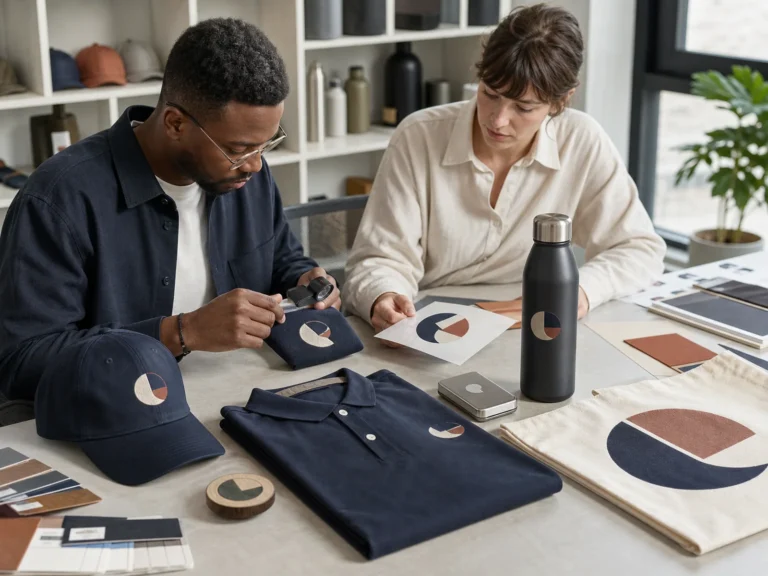
Un T-shirt doux et épais en noir délavé, crème, sauge, marine ou anthracite sera généralement plus porté qu'une chemise promotionnelle brillante qui ressemble à un uniforme. Un sweat-shirt décontracté avec des broderies de bon goût peut devenir la tenue d'aéroport ou de week-end de quelqu'un.
L'objectif est simple : créer quelque chose que les gens n'auront pas honte de porter en public.
Il résout un problème réel
Les produits de marque utiles sont puissants parce qu'ils méritent une exposition répétée. Un parapluie, un gobelet isotherme, un chargeur portable, une housse pour ordinateur portable ou une pochette de voyage de haute qualité peuvent faire partie de la routine d'une personne.
Plus un objet aide quelqu'un, plus le lien est fort.
Cela ne signifie pas que chaque produit doit être sérieux ou pratique. Mais s'il est pratique, il doit fonctionner correctement.
Il s'aligne sur la marque
Un hôtel de charme peut choisir des sacs de plage en lin, des tasses à expresso en céramique ou des masques de sommeil personnalisés. Une marque de bien-être peut proposer des sangles de yoga, des bouteilles d'eau ou des chaussettes en coton biologique doux. Une entreprise technologique peut opter pour des range-câbles, des tapis de bureau ou des sacs à dos élégants.
L'article doit donner l'impression de provenir du même monde que la marque.
Lorsqu'il n'y a pas de lien, les gens le remarquent. Une marque de soins de luxe qui distribue un porte-clés en plastique bon marché semble aléatoire. Une entreprise d'activités de plein air durables qui distribue des babioles en plastique jetables semble pire qu'aléatoire - elle semble hors de la marque.
L'essor des produits de marque durables
Dans de nombreux espaces de consommation, le développement durable est passé du statut de “bon à avoir” à celui de “pourquoi ne le faites-vous pas déjà ? Cette évolution a modifié en profondeur le secteur des produits de marque.
Les gens ne veulent pas plus d'encombrement. Ils ne veulent pas de déchets. Ils ne veulent pas d'objets destinés à la décharge mardi prochain.
Cela a poussé les marques à faire de meilleurs choix : matériaux recyclés, coton biologique, emballages réutilisables, produits locaux, alternatives sans plastique et produits conçus pour une utilisation à long terme.
Les marchandises de marque durables peuvent inclure
- Sacs fourre-tout en coton recyclé
- Bouteilles d'eau en acier inoxydable
- Boîtes à lunch en bambou
- Vêtements en coton biologique
- Sacs à dos en polyester recyclé
- Cartes en papier semence
- Tasses à café réutilisables
- Cahiers en liège
- Accessoires en tissu recyclé
Bien entendu, les affirmations relatives à la durabilité doivent être sincères. Les consommateurs modernes sont prompts à repérer l'écoblanchiment. Si un produit est présenté comme respectueux de l'environnement mais expédié à l'autre bout du monde dans un emballage plastique excessif, le message commence à s'effondrer.
La meilleure approche est honnête et pratique. Choisissez des matériaux de meilleure qualité dans la mesure du possible. Réduire les emballages inutiles. Donner la priorité à l'utilité. Éviter de commander des quantités massives d'articles que personne n'a demandés.
Une petite série de produits bien pensés fait souvent plus de bien que des milliers de cadeaux bon marché.
Marchandises de marque pour les événements : Moins d'encombrement, plus de mémoire
C'est lors des événements que les produits de marque brillent souvent - ou ratent complètement leur cible.
Tous ceux qui ont participé à un salon professionnel, à une conférence, à un festival de musique, à un sommet de startups ou à une retraite d'entreprise connaissent la routine. Vous arrivez, on vous remet un sac et vous vous retrouvez avec huit brochures, trois stylos, une feuille d'autocollants, un en-cas qui vous inspire ou non confiance et une bouteille d'eau dont vous savez déjà que vous ne l'utiliserez pas.
Mais la marchandise d'un événement peut être fantastique lorsqu'elle est faite avec intention.
Pensez à l'expérience des participants. Les participants marchent, tissent des liens, prennent des notes, vérifient leur emploi du temps, rechargent leur téléphone, essaient de s'hydrater et se demandent probablement où se trouve le bon café. La marchandise qui accompagne ces moments est immédiatement pertinente.
Pour une conférence, les éléments utiles peuvent être les suivants
- Un cahier et un stylo de qualité
- Une bouteille réutilisable avec des stations de recharge à proximité
- Un chargeur de téléphone ou une banque d'énergie
- Un fourre-tout léger qui tient bien en place
- Une crème pour les mains ou un baume à lèvres en format voyage
- Une casquette confortable pour les événements en plein air
- Un porte-badge qui n'est pas gênant à porter
Pour une retraite d'entreprise, l'approche peut être plus chaleureuse et plus personnelle. Un sweat-shirt confortable, une boîte de snacks locaux, une tasse en émail personnalisée ou un sac de week-end peuvent faire de l'événement un moment dont les gens se souviendront.
L'essentiel est de ne pas surcharger les gens. Un excellent article vaut mieux que cinq articles oubliables.
La stratégie de marque subtile l'emporte généralement
Ce n'est pas pour rien que tant de marques de style de vie moderne misent sur la subtilité. C'est plus facile à porter. Plus adulte. Plus globale.
Un petit logo brodé sur la manche. Une marque ton sur ton sur une casquette. Un graphisme minimal sur le coin d'un sac à main. Un patch de type étiquette au lieu d'un imprimé géant.
Les marchandises de marque subtiles laissent aux gens la possibilité de s'approprier l'article. Elle ne les transforme pas en publicité ambulante. Elle leur permet d'utiliser le produit parce qu'ils l'aiment vraiment.
C'est important.
On partait autrefois du principe qu'une image de marque plus importante signifiait une meilleure visibilité. Mais la visibilité sans la désirabilité ne sert pas à grand-chose. Si le logo est trop grand ou si le design donne l'impression d'être trop corporatif, l'article risque de ne jamais quitter le placard.
Un design plus raffiné peut être porté, transporté, photographié, partagé, emprunté et remarqué dans la vie réelle.
C'est une meilleure image de marque.
La marchandise de marque comme vecteur de relations
L'une des forces sous-estimées de la marchandise de marque est le timing émotionnel. Un cadeau bien pensé peut faire mouche comme la communication numérique le fait rarement.
Un kit de bienvenue pour un nouvel employé. Un kit de remerciement pour un client fidèle. Une boîte de lancement pour les créateurs ou la presse. Un petit cadeau de Noël pour les clients. Un article surprise glissé dans une commande en ligne.
Ces moments sont personnels parce qu'ils sont physiques. Quelqu'un ouvre un paquet. Elle touche le produit. Elle remarque la carte. Il décide s'il s'agit d'un geste attentionné.
Cette expérience peut approfondir une relation.
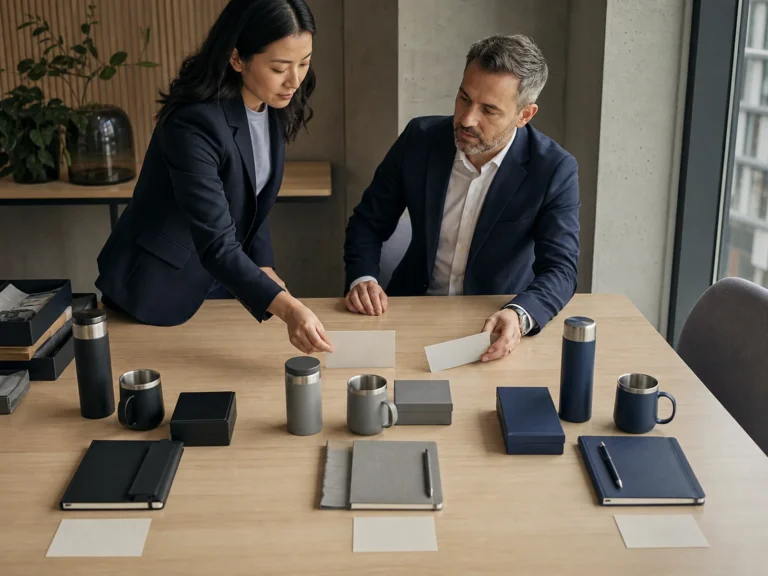
Pour les employés, les articles de marque peuvent contribuer à créer un sentiment d'appartenance, en particulier dans les équipes hybrides ou distantes. Un kit d'accueil bien conçu comprenant un sweat à capuche, un carnet de notes, une tasse et une note personnelle peut faire en sorte que quelqu'un se sente intégré avant même d'entrer dans un bureau.
Pour les clients, les produits dérivés peuvent susciter la fidélité lorsqu'ils sont perçus comme un cadeau plutôt que comme un gadget. Un torréfacteur inclut une boule de café joliment conçue dans une boîte d'abonnement. Un studio de fitness offre à ses membres une serviette qu'ils utiliseront réellement. Un éditeur de logiciels envoie un kit de mise à niveau de bureau à ses clients de longue date.
L'objet lui-même est important, mais le geste l'est tout autant.
Comment choisir la bonne marchandise de marque ?
Le choix des produits de marque doit se faire en fonction de l'audience et non du catalogue.
Il est tentant de parcourir les listes de produits et de choisir ce qui semble abordable ou à la mode. Mais la meilleure question à se poser est la suivante : à qui s'adresse ce produit et quelle place occupera-t-il dans sa vie ?
Une marque ciblant les grands voyageurs peut trouver plus de valeur dans les étiquettes de bagages, les cubes d'emballage, les organiseurs technologiques ou les couvertures de voyage. Une marque s'adressant à des professionnels de la création sera plus à l'aise avec des carnets de croquis, des accessoires de bureau, des accessoires pour le café ou des vêtements élégants. Une marque de bien-être peut se concentrer sur des articles qui procurent une sensation de calme, de toucher et de repos.
Avant de commander, il est utile de demander :
- Qu'est-ce que notre public utilise déjà ?
- Qu'est-ce qui leur paraîtrait naturel dans leur routine quotidienne ?
- Quel niveau de qualité reflète notre marque ?
- Quel objet serions-nous personnellement heureux de recevoir ?
- Pouvons-nous rendre le design suffisamment subtil pour une utilisation dans la vie réelle ?
- Existe-t-il une version plus durable ?
- Choisissons-nous cela parce que c'est utile ou simplement parce que c'est bon marché ?
Cette dernière question est généralement la plus révélatrice.
Les produits bon marché donnent souvent l'impression d'être bon marché. Et lorsqu'un article représente votre marque, cela peut poser problème. Il est préférable de réduire la quantité plutôt que de sacrifier l'ensemble de l'expérience.
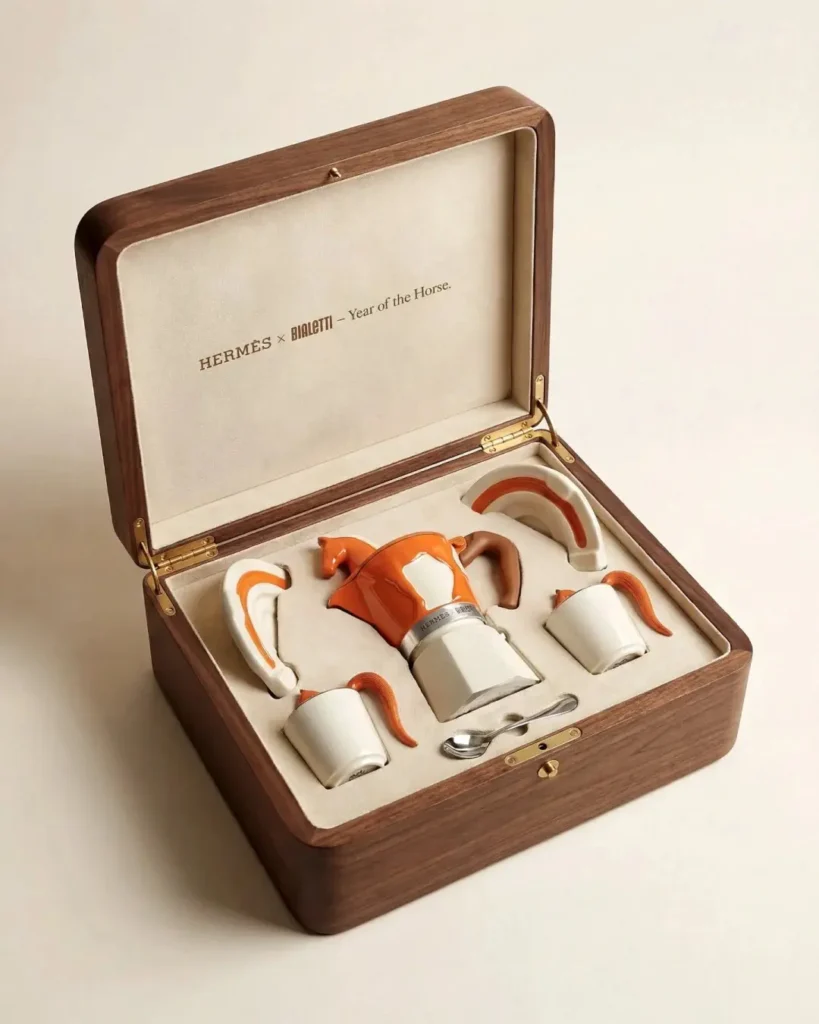
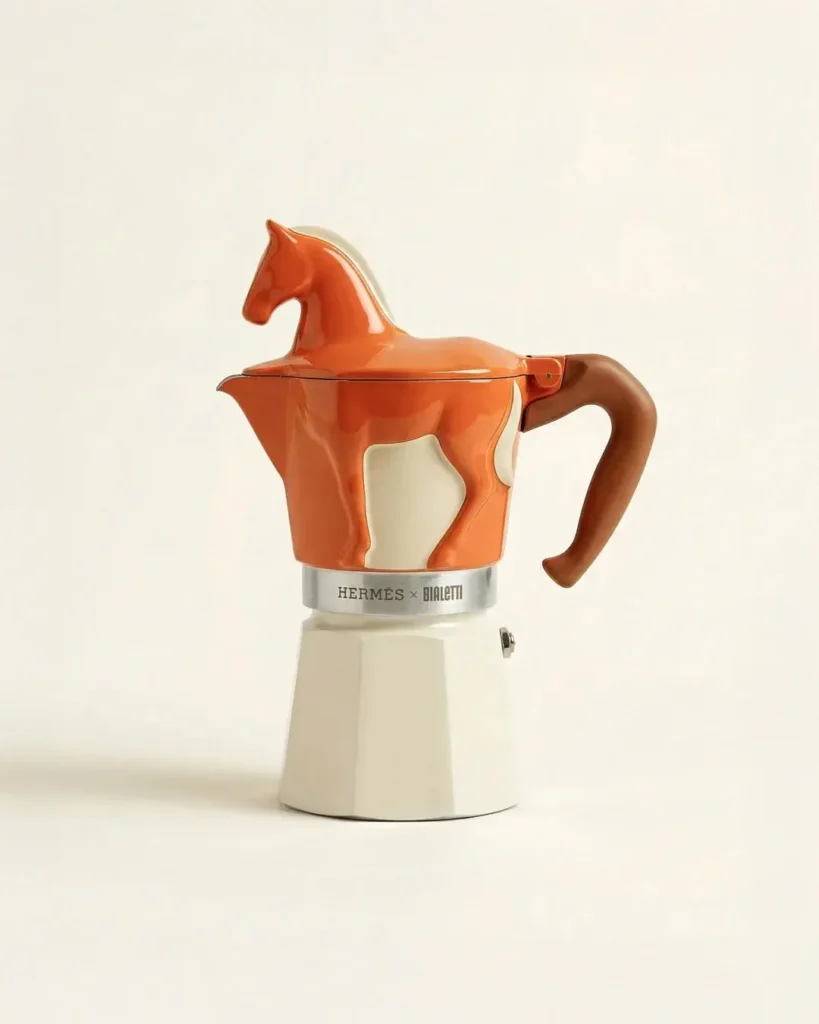
L'attrait mondial : Concevoir des produits de marque pour différents marchés
Si votre marque touche des clients ou des employés dans plusieurs pays, les produits de marque doivent être conçus dans une optique mondiale.
Un produit qui fonctionne à merveille en Californie peut ne pas être pratique à Stockholm. Un design qui semble audacieux et amusant sur un marché peut sembler trop criard sur un autre. La taille, le climat, les normes culturelles, la logistique d'expédition et les préférences en matière de couleurs sont autant de facteurs qui peuvent influer sur la manière dont les marchandises sont reçues.
Pour les publics internationaux, les produits polyvalents sont les plus sûrs. Pensez à des silhouettes de vêtements classiques, à des couleurs neutres, à des boissons de haute qualité, à des carnets de notes, à des accessoires technologiques, à des sacs et à des articles adaptés aux voyages.
Le design minimal est également un bon vecteur de communication. Une typographie claire, des matériaux bien pensés et une image de marque sobre ont tendance à être plus universels que des graphiques criards ou des références trop locales.
Cela ne signifie pas que les marchandises doivent être ennuyeuses. Cela signifie simplement qu'elle doit être consciente. Un produit attrayant à l'échelle mondiale peut toujours avoir de la personnalité - il ne s'appuie simplement pas sur des tendances qui n'ont de sens que dans une seule ville ou une seule sous-culture.
Les meilleures marchandises de marque mondiale sont suffisamment familières pour être utilisées, mais suffisamment distinctives pour être mémorisées.
Les erreurs qui donnent l'impression que les produits de marque sont jetables
Même les bonnes marques prennent de mauvaises décisions en matière de merchandising. En général, ces erreurs sont dues à la précipitation, à une image de marque trop marquée ou à une trop grande attention portée aux coûts.
Les problèmes les plus courants sont les suivants :
Choisir des articles dont personne n'a besoin
La nouveauté peut être amusante, mais la nouveauté inutile a une durée de vie courte. Si quelqu'un ne peut pas s'imaginer utiliser l'objet après les cinq premières minutes, il ne créera probablement pas beaucoup de valeur.
Un logo trop grand
Il existe des exceptions, notamment pour les marques de style streetwear ou les communautés de fans. Mais pour la plupart des entreprises, les logos surdimensionnés réduisent la facilité d'utilisation au quotidien.
Ignorer la qualité
Un stylo qui n'écrit pas, une bouteille qui fuit ou une chemise qui rétrécit après un seul lavage peuvent faire plus de mal que de bien. La mauvaise qualité fait partie de l'impression de la marque.
Oublier le public
Un article à la mode ne fonctionne que s'il convient aux personnes qui le reçoivent. La marchandise doit refléter leur style de vie, et pas seulement le tableau Pinterest de l'équipe marketing.
Trop de commandes
Les remises en gros sont tentantes, mais les cartons de marchandises périmées ne sont pas gagnants. Les commandes plus petites et plus intelligentes sont généralement plus performantes.
Les meilleurs articles de marque ont l'air d'un cadeau
Dans le meilleur des cas, les produits de marque sont généreux.
Pas forcément cher. Généreux.
Il dit : “Nous avons pensé à ce qui pourrait vous plaire”. C'est très différent de “Nous avons apposé notre logo sur la chose la moins chère que nous avons pu trouver”.”
Les gens sentent immédiatement la différence.
Un bon produit de marque a une sorte de confiance tranquille. Il ne cherche pas à attirer l'attention. Il n'a pas besoin de s'expliquer. Il s'intègre simplement dans la vie d'une personne et y gagne sa place.
Il peut s'agir d'un sweat à capuche qui fait partie de l'uniforme du week-end. Une tasse qui rend le café du matin un peu plus agréable. Un sac fourre-tout pour transporter les courses, les livres, les vêtements de sport et les courses de dernière minute à la pharmacie. Un carnet de notes qui recueille les idées, les notes de réunion et les plans à moitié terminés.
Il s'agit d'objets ordinaires. Or, c'est justement dans les objets ordinaires que les marques peuvent devenir familières.
Tous les moments de marketing ne doivent pas nécessairement être bruyants. Parfois, l'impression de marque la plus efficace est celle qui se trouve sur un bureau, accrochée à la porte ou rangée dans un bagage à main.
Dernières réflexions sur les marchandises de marque
Les marchandises de marque ne consistent pas à donner plus de choses aux gens. Du moins, ce ne devrait pas être le cas.
Il s'agit de créer quelque chose d'utile, d'attrayant et de suffisamment mémorable pour faire partie de la vie réelle. Les marques qui l'ont compris s'éloignent des objets promotionnels jetables et s'orientent vers des produits mieux conçus, avec de meilleurs matériaux et au meilleur moment.
Cette évolution est bénéfique pour les clients. Il est bon pour les employés. C'est bon pour la planète. Et honnêtement, c'est aussi bon pour les marques.
Car lorsque quelqu'un choisit de conserver votre marchandise, de l'utiliser, de la porter et de l'intégrer dans son quotidien, il ne s'agit pas seulement d'exposition.
C'est cela la confiance.
Et dans un monde rempli de publicités que les gens essaient d'éviter, la confiance est toujours la chose qui vaut la peine d'être gagnée.
Créer des produits de marque que les gens veulent vraiment avec Lugvo
Si votre marque est prête à aller au-delà des cadeaux oubliables, Lugvo peut vous aider à créer marchandises de marque qui semble réfléchie, pratique et adaptée à la vie réelle.
Des sacs de tous les jours aux accessoires de style de vie que l'on souhaite conserver, en passant par les indispensables pour les voyages, Lugvo allie un design utile à la narration de la marque d'une manière qui semble moderne, naturelle et mémorable.
Qu'il s'agisse de préparer un événement, de créer des kits d'accueil pour les employés, de remercier des clients fidèles ou de lancer des produits personnalisés pour votre communauté, nous facilitons la transformation de votre marque en quelque chose que les gens peuvent transporter, utiliser et dont ils se souviennent.
Prêt à créer des produits de marque qui méritent une place dans la vie quotidienne des gens ? Explorez Lugvo dès aujourd'hui et commencez à créer des produits que votre public aimera vraiment.


 English
  Español
  Français
  العربية
  Italiano
  Deutsch
  日本語
日本語  Nederlands
  Svenska
  Norsk bokmål
  Dansk
Dansk  Suomi
Suomi  한국어
한국어  Ελληνικά
  עִבְרִית
  Română
  Türkçe
  Русский
2 réponses