
Første gang vi sendte det teamet selvsikkert kalte et “premium gavesett” til tre regioner, ankom gavene i tre forskjellige stemninger.
I Europa så eskene perfekte ut - skarpe hjørner, rene hylser, den typen opppakking du kan forestille deg at skjer på en rolig fredag ettermiddag. I USA hadde to kartonger tydeligvis hatt en røffere tur; ingenting var ødelagt, men de stive eskene hadde små bulker som en dårlig holdning. I APAC sendte en mottaker et bilde: Innstikkskortet hadde forskjøvet seg og satt diagonalt over lokket, som om det hadde gitt opp.
Varene på innsiden var fine. Det var ikke opplevelsen.
Det er den delen de fleste merkevarer lærer på den harde måten om tilpassede firmagaverDu kjøper ikke “objekter med logo”. Du kjøper en kontrollert opplevelse - materialer, budskap, emballasje, produksjon, kvalitetskontroller og den siste milen. Hvis en av delene glipper, glipper merkevaren din sammen med den.
Denne guiden er skrevet for team som ønsker at premiumgaver skal føles rolige og veloverveide. Ikke hektisk. Ikke bråkete. Ikke “vi bestilte 600 enheter og håpet på det beste”.”
Tilpassede forretningsgaver: Hva du egentlig kjøper (det er mer enn produktet)
Et tilpasset gaveprogram ser ut som en shoppingoppgave. Det er nærmere en liten produktlansering.
Du kjøper:
- Konsistens (hver enhet skal føles som den samme beslutningen)
- Holdbarhet (overflatebehandling som ikke riper, esker som overlever ekte frakt)
- Smak (beherskelsen til å la kvalitet tale)
- Troverdighet (en gave som føles som en relasjon, ikke en kampanje)
- Operasjonell sikkerhet (prøvetaking, kvalitetskontroll, tidslinjer og en erstatningsplan)
De fleste gaveprogrammer skuffer av kjedelige grunner - forhastede godkjenninger, uklare nivåer, emballasje som ser bra ut på bilder, men som leveres dårlig, eller tilpasningsvalg som ser bra ut på mockups, men som ikke fungerer i praksis.
Hvis du vil at resultatet skal føles førsteklasses, må du bygge en førsteklasses prosess.
Tilpassede forretningsgaver: Bestem deg for jobben før du velger varene
Folk hopper rett til produktene fordi det føles produktivt. Det er også slik du ender opp med dyrt rot.
Begynn med “jobben” gaven skal gjøre:
Beholde kunder (fornyelser, lange partnerskap, nøkkelkunder)
Dette er ikke et fyrverkeriøyeblikk. Det er et tillitsøyeblikk.
En oppbevaringsgave skal føles:
- jevn
- nyttig
- stille og rolig raffinert
Unngå nyheter. Unngå alt som får mottakeren til å tenke, Dette blir gøy i fem minutter.
Førsteinntrykk (nye interessenter, nye partnere)
De første gavene skal være enkle og umiskjennelig godt laget.
En god regel: én heltegjenstand som ser ut og føles “riktig” første gang de tar på den. Resten - emballasje, merknad, små detaljer - skal forsterke, ikke konkurrere.
Arrangement/konferanse (stort volum, transportabel, rask)
Eventgaver lever og dør av praktiske løsninger.
Mottakeren din bærer:
- noen andres brosjyre
- en veske de ikke har bedt om
- en telefon som er på 12%
- et boardingkort de prøver å ikke miste
Gaven din må derfor være kompakt, holdbar og umiddelbart forståelig.
Interne programmer (ansatte, onboarding, milepæler)
Medarbeiderne evaluerer ikke gaven din slik en kunde ville gjort. De evaluerer den som et signal:
- Er dette gjennomtenkt eller performativt?
- Er det rettferdig?
- Var det lett å ta imot?
- Kommer jeg faktisk til å bruke den?
Når det gjelder gaver til ansatte, er “last-mile operations” ikke en fotnote. Det er selve opplevelsen.

Tilpassede forretningsgaver: Merkevarebygging som ser dyr ut (fordi den oppfører seg dyrt)
Premium merkevarebygging prøver ikke å vinne oppmerksomhet. Den gjør seg fortjent til den.
Hvis logoen er det mest fremtredende elementet, slutter gaven å føles som en gave og begynner å føles som en leksjon i markedsføring.
Det som vanligvis leses som premium
- Lasergravering på metall (rene kanter, lite visuell støy, lang levetid)
- Prägling/trykk på skinnlignende notatbokomslag (subtilt, taktilt)
- Tone-i-tone-merker (du legger merke til dem når lyset treffer, ikke fra andre siden av rommet)
- Kopi på innsiden av lokket (merkevarestemmen din kan leve her uten å ta over objektet)
Det som ofte leses som “promo”, selv når budsjettet er høyt
- overdimensjonert logo sentrert på helteobjektet
- slagord, QR-koder eller tungt kampanjespråk
- utskrifter på overflater med høy berøringsfølsomhet som riper eller falmer
En overraskende ærlig test: Vil en kunde føle seg komfortabel med å bruke den i et møte der konkurrentene dine kan se den?
Hvis ikke, har du designet en reklameplakat, ikke en gave.
Tilpassede forretningsgaver: Emballasjen er der du vinner (eller taper) øyeblikket
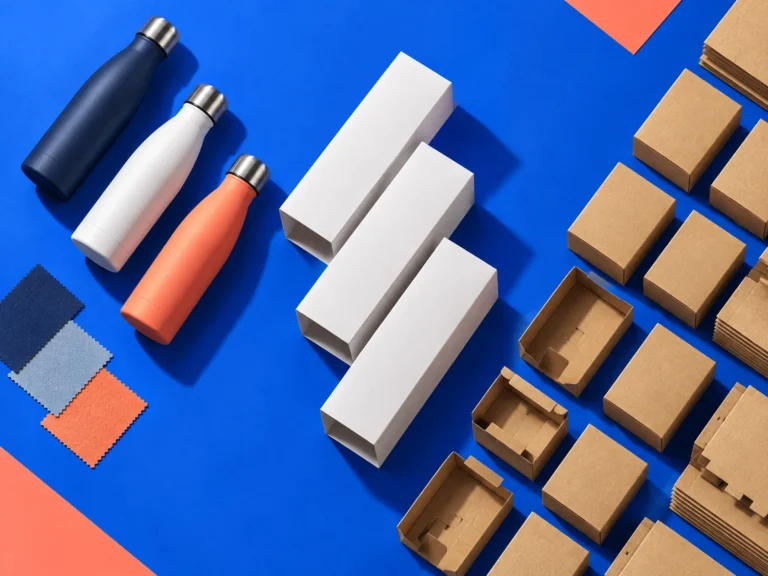
Når folk sier “dette føles premium”, reagerer de på et knippe mikrosignaler:
- stivheten til eskeplaten
- hvordan lokket lukkes (rent, ikke løst)
- om innsatsen holder alt på plass
- om noe skrangler
- om kortet er justert og plassert med vilje
Dette er små detaljer. De er også hele spillet.
Eskeformater som forblir elegante i ekte frakt
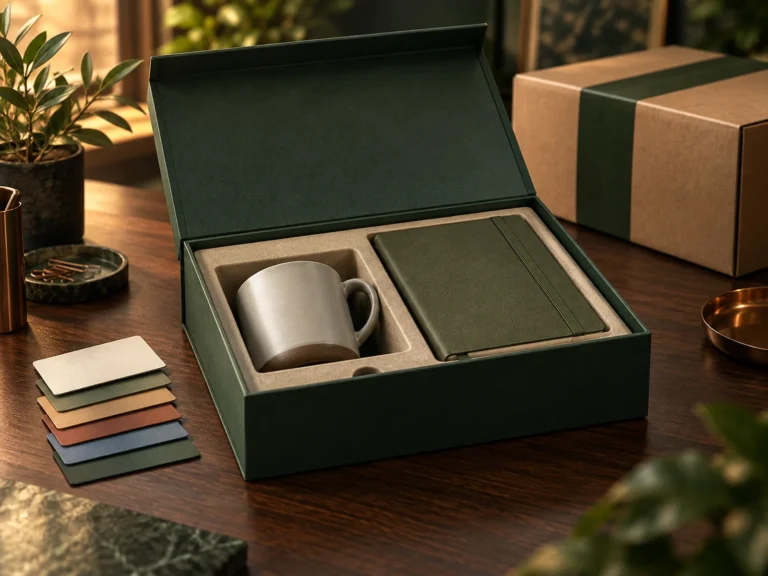
- Stiv boks i to deler (lokk + bunn): klassisk, stabil, skalerbar
- Skuffestiv boks: en kontrollert avsløring, ingen høylytt “luksuskino”
- Stiv boks med magnetisk lukking: Utøvende følelse, men trenger sterkere beskyttelse under frakt
- Ytre avsender + indre gaveeske: det beste valget for konsekvent global levering
Hvis du sender internasjonalt, må du utforme emballasjen med tanke på virkeligheten: hjørner blir slått, kartonger blir stablet, luftfuktigheten endres, og “håndter med forsiktighet” er ... ambisiøst.
Innslag: detaljene mottakerne ikke nevner, men alltid føler
Innlegget er det som får innsiden til å se kuratert ut i stedet for kaotisk.
Et godt innlegg:
- hindrer bevegelse (ingen skrangling)
- beskytter overflater mot gnissing
- gjør at oppsettet føles designet (ikke fylt)
Et dårlig innlegg får selv en god vare til å føles billigere, fordi førsteinntrykket er uorden.
Kortet (og hvorfor “generisk takknemlighet” underpresterer)
Et “Takk for støtten”-kort er høflig. Det er også lett å glemme.
Et bedre kort gjør én ting: Det beviser at det finnes et forhold på den andre siden av esken.
Eksempel på forskjellen:
- Generisk: “Takk for støtten i år.”
- Menneske: “Takk for samarbeidet i år - spesielt den raske lanseringen i september.”
Denne ene detaljen endrer den emosjonelle vekten av den samme gaven.
Tilpassede forretningsgaver: Velg riktig type tilpasning (slik at du ikke sprenger tidslinjen)
“Tilpasning” er ikke én spak. Det er tre. Trikset er å velge den som passer til din ledetid og risikotoleranse.
Nivå 1 - Emballasjetilpasning (rask, høy opplevd verdi)
Hvis du prøver å se førsteklasses ut uten å overkomplisere produksjonen, er emballasjen din beste venn:
- tilpassede ermer / magebånd
- merket papirlommetørkle + forseglingsmerke
- konsekvent stiv eske med variantinnsatskort etter publikumsnivå
- plassering av melding på innsiden av lokket
Dette er ofte den reneste måten å skape en førsteklasses opplevelse i stor skala.
Nivå 2 - Varetilpasning (varig merkevaretilstedeværelse)
Flott når varen er ment å brukes ukentlig, ikke bare én gang:
- laser på metall
- preging på omslag til notatbøker
- vevd etikett for tekstiler
Det er her kvaliteten er viktig: Hvis merket ser grunt, skjevt eller inkonsekvent ut, går tilpasningen i vasken.
Nivå 3 - Personalisering (navn/initialer/rollesett)
Høyest opplevd verdi, høyest operasjonell kompleksitet.
Den vanligste feilen: å velge personalisering etter produksjonsplanleggingen begynner.
Hvis du tilpasser, trenger du det:
- en datafrist (låst tidlig)
- et tydelig navneformat (store bokstaver? aksenter? spesialtegn?)
- en erstatningsplan (fordi noens navn vil bli feilstavet et eller annet sted, til slutt)
Tilpassede forretningsgaver: Budsjettnivåer som føles kuraterte (ikke overfylte)
Premium-trekk er sjelden “flere varer”. Det er færre varer med bedre beslutninger.
- Under $25: ett sterkt hovedelement, ren emballasje, minimal merkevarebygging
- $25-$60: én helt + én støttende detalj, bedre materialer/finish
- $60-$120: færre varer, høyere kvalitet, valgfri personalisering
- $120+: VIP-nivå QC, rolig luksus, lagvis unboxing, virkelig personlig notat
En enkel redigeringstest: Hvis det å fjerne ett element får boksen til å føles mer premium, den gjenstanden hørte aldri hjemme der.

Tilpassede forretningsgaver: Tidslinjen du faktisk trenger (ikke den du håper på)
De fleste lag undervurderer to ting:
- Prøvetaking tar tid fordi beslutninger endres når du tar på produktet
- Forsendelsen respekterer ikke dine interne tidsfrister
En realistisk tidslinje for globale gaver:
- Uke 1: publikumsnivåer, regioner, restriksjoner, budsjettgrupper
- Uke 2: shortlist + emballasjestyring + regler for merkevarebegrensning
- Uke 3: fysiske prøver + revisjonsrunde
- Uke 4-6: produksjon + QC-kontroll midt i produksjonen
- Uke 6-8: frakt + montering + sluttkontroll
- Uke 8+: leveringsvindu (internasjonal variabilitet)
Hvis du planlegger levering i desember og starter i midten av november, er du ikke “sent ute” - du velger en strategi som heter håp, og håp er ikke en forsyningskjede.
Den ubehagelige sannheten om gaver er at mottakerne bedømmer hele opplevelsen ut fra den første feilen de legger merke til.
En litt skjev logo. Et lokk som ikke lukkes ordentlig. En svak skramme på en “premium”-finish. Ingen av disse er katastrofale i seg selv - men de endrer stille og rolig historien fra vurdert til masseprodusert. Og når historien først har forandret seg, er det vanskelig å trekke den tilbake.
Denne andre halvdelen er den lite glamorøse delen: kvalitetskontroll, prøvetakingsdisiplin, forsendelsesrealiteter og erstatningsplanlegging. Det er det som hindrer et vakkert konsept i å bli en dyr unnskyldningsturné.
Tilpassede forretningsgaver: Kvalitetskontroll som forhindrer de vanligste “premium”-feilene
QC høres ut som et fabrikktema helt til du er den som stirrer på 400 enheter med inkonsekvent graveringsdybde. Da blir QC personlig.
Hva du bør inspisere (og hvorfor det er viktig)
1) Konsistent logoplassering
- Kontroller justeringen på tvers av flere enheter (ikke bare én).
- En avdrift på 2-3 mm er synlig på ren, minimal design - spesielt på bærbare datamaskiner og metalloverflater.
2) Merkekvalitet (gravering/ preging/trykk)
- For lasergravering: se etter rene kanter og jevn dybde.
- For preging/embossing: Kontroller at dybden ikke er “knapt nok der” (vanlig når leverandører spiller safe for å redusere kassering).
- For trykking: Gjør en rask slipetest - skrubb med en tørr klut, deretter en lett fuktig.
3) Overflatefinishens holdbarhet
- Matte belegg og soft-touch-finish kan slites opp.
- Test hjørner og kanter med en fingernegl. Hvis det er lett å få merker på kontoret, vil det også være lett å få merker under transport.
4) Konsistente farger
- Stikkprøvekontroll på tvers av partier under nøytralt lys.
- Hvis merkefargene dine er viktige (og det er de), må du kreve en standard for pantone/match og bekrefte akseptabel toleranse.
5) Emballasjestrukturens integritet
- Sjekk: hjørnenes motstand mot knusing, magnetisk lukkestyrke, skuffeglidning (hvis skuffeboks) og hvordan lokket sitter.
- “Premium”-esker som ankommer litt skjeve, ser umiddelbart billigere ut.
6) Passform på innsatsen
- Gjenstander skal ikke rasle.
- Innsatsene bør ikke være så stramme at det føles som en brytekamp å ta ut helteobjektet.
Hvor mange enheter som skal kontrolleres (slik at QC er reell, ikke symbolsk)
En praktisk tilnærming for kjøringer med middels volum:
- Prøve før produksjon: 1-2 komplette sett godkjent før masseproduksjon
- Inspeksjon midt i produksjonen: tilfeldig kontroll av ~5-10% (eller et fast antall som 20-50 sett avhengig av volum)
- Siste kontroll før forsegling av kartonger: rask visuell passering + stikkprøvekontroll (spesielt for personlige varer)
Målet er ikke perfeksjon. Målet er ingen overraskelser.
Tilpassede forretningsgaver: Prøvetakingsregler som redder deg fra “ser bra ut på bilder”-syndromet
Prøvetaking er der gode intensjoner møter virkeligheten - og virkeligheten har som regel litt andre farger.
De tre prøvene du faktisk trenger
1) Produktprøve (funksjon + følelse)
- Vekt, tekstur, hengselmotstand, passform, glidelåskvalitet - dette er “håndfølelse”-detaljer som bilder ikke kan gjengi.
2) Merkevareprøve (merkekvalitet)
- Insister på å få en ekte prøve med din nøyaktige tilpasningsmetode.
- “Vi gjør det slik” er ikke en prøve; det er optimisme med et sporingsnummer.
3) Full emballasjeprøve (opplevelsen)
- Boks + innsats + silkepapir + kort + plassering.
- Du godkjenner opppakningskoreografien, ikke bare innholdet.
Hva du bør se etter under prøvetaking (en rask sjekkliste for mennesker)
- Er det noe som føles vanskelig å åpne?
- Ser logoen ut som om den hører hjemme, eller som om den er lagt til senere?
- Føles materialene sammenhengende sammen (samme “formspråk”)?
- Ville du vært stolt over å gi dette til en eldre kunde uten noen forklaring?
Godkjenningsfellen du bør unngå
Team godkjenner noen ganger basert på:
- en eneste perfekt prøve
- monteres sakte av en forsiktig person
- med de beste enhetene valgt ut
Din jobb er å godkjenne noe som fortsatt ser førsteklasses ut når:
- den er satt sammen i stor skala
- håndteres raskt
- fraktet på tvers av regioner
- åpnet av noen som er opptatt
Spør etter flere enheter i prøvefasen hvis du kan. Inkonsekvens skjuler seg i godkjenninger av enkeltstykker.
Tilpassede forretningsgaver: Risiko for ledetid - hvor prosjekter faktisk glipper
De fleste forsinkelser skjer på forutsigbare steder:
- Merkevareoppsett: Justeringer av kunstverk, justering av prøvetrykk, oppsett av plater/fiksturer
- Innkjøp av emballasje: spesialtilpassede esker og innsatser tar ofte lengre tid enn varene
- Montering: å sette sammen hundrevis av sett er en egen miniproduksjon
- Frakt + toll: Variabilitet er standard, ikke unntaket
Et rolig program behandler ledetid som en designbegrensning, ikke som en ettertanke.
Tilpassede forretningsgaver: Globale fraktrealiteter (og hvordan du kan designe rundt dem)
Internasjonale gaver er ikke bare “frakt, men lenger”. Det er et annet spill med andre feilmodi.
Kategorier som skaper friksjon som kan unngås
- Batterier / powerbanks / noe elektronikk: restriksjoner, dokumentasjon, transportørbegrensninger
- Væsker, geler, aerosoler: toll og lekkasjerisiko
- Lett bedervelige varer / mat: holdbarhet, importregler, allergi og følsomhet
- Dufter/lys: noen ganger bra, noen ganger en hodepine for tollvesenet, alltid et smaksspill
Utforming for global leveringskonsistens
Hvis du må sende globalt, må du utforme settet slik at det overlever:
- stablingstrykk (kartonger blir stablet)
- fuktighetsendringer
- temperatursvingninger
- tidvis røff håndtering
Praktiske valg som hjelper:
- færre skjøre overflater
- beskyttende innlegg
- ytre avlastere for stive esker
- unngå altfor ømfintlige lukninger som spretter opp under transport
Adressedata: den usexy morderen
Hvis du sender til mange mottakere, er det ofte ikke produktet som utgjør den største risikoen - det er adresselisten.
Vanlige problemer:
- manglende enhetsnummer
- utdaterte kontoradresser
- mottakere går over til fjernarbeid
- ikke-latinske tegn håndteres feil (hvis oppfyllelsessystemet ikke kan behandle dem rent)
Beste praksis for drift:
- validere adresser før forsendelse
- standardisere formateringsregler
- planlegge for en viss andel “ikke-leverbare varer” uten å gjøre det til en krise
Tilpassede forretningsgaver: Erstatningspolicy (fordi noe vil skje)
Selv med perfekt planlegging vil noen esker komme for sent, bli skadet eller sendt feil. Merkevareopplevelsen avhenger av hvordan du håndterer dette øyeblikket.
Bestem disse retningslinjene før du sender
- Utskifting av vindu: f.eks. erstatte problemer som rapporteres innen X dager etter levering
- Skadesikker: bilde kreves (hold det enkelt)
- Lagerbuffer: beholde en liten prosentandel av ekstra sett til erstatninger
- Som svarer: et ekte e-postalias som ikke forsvinner etter kampanjen
Det verste utfallet er ikke “noen få skader”. Det verste utfallet er at mottakeren må jobbe hardt for å fikse det.
Et premiumprogram er sjenerøst og raskt i de sjeldne øyeblikkene det trenger å være det.
Tilpassede forretningsgaver: Sjekkliste for anskaffelser (bruk denne for å godkjenne med tillit)
Her er en praktisk sjekkliste du kan kopiere inn i det interne dokumentet ditt.
Strategi
- Målgruppesegmenter definert (kunder vs. ansatte, nivåinndeling, regioner)
- Målsetting skrevet i én setning (oppbevaring / førsteinntrykk / arrangement / internt)
- Budsjettnivå bekreftet (og hva “premium” betyr på dette nivået)
Kreativ og merkevare
- Valg av merkemetode (laser, preging osv.) og godkjenning på et ekte eksemplar
- Regler for logoplassering (størrelse, plassering, tone)
- Godkjent teksttone (kort, menneskelig, ikke kampanjeaktig)
Emballasje
- Eskadestruktur valgt for forsendelsesvirkelighet (ytteremballasje om nødvendig)
- Innlegget forhindrer bevegelse og slitasje
- Kortplassering og budskap ferdigstilt
- Endelig godkjent unboxing-eksempel (komplett sett)
Operasjoner
- Tidslinjen inkluderer prøvetaking + produksjon + montering + fraktbuffere
- Plansett for adresseinnsamling + valideringstrinn inkludert
- Internasjonale restriksjoner sjekket for hver region
- Planlagte QC-kontrollpunkter (midt i produksjonen + før levering)
Mottakerens erfaring
- Tydelige retningslinjer for erstatning + kontaktkanal
- Bufferlager reservert for skader/feilavtrykk
- Planlagt sporing/varsling (etter behov)
Hvis alle linjene ovenfor er “ja” tilpassede firmagaver slutter å være stressende. De blir repeterbare - et program, ikke en kamp.
Tilpassede forretningsgaver: En stille fordel du kan bygge én gang og bruke hele året
De mest modne gaveprogrammene finner ikke opp hjulet på nytt hver gang. De bygger et lite system:
- ett eller to premium emballasjeformater du gjenbruker
- et sett med godkjente merkevarebyggingsmetoder
- nivåmaler (A/B/C)
- en kalender (oppstart, milepæler, hendelser, årsavslutning)
- en forutsigbar leverandør/QC-rytme
Det er slik gaver blir til merkevarekapital: ikke høylytt, ikke prangende - bare konsekvent godt utført.


 English
  Español
  Français
  العربية
  Italiano
  Deutsch
  日本語
日本語  Nederlands
  Svenska
  Norsk bokmål
  Dansk
Dansk  Suomi
Suomi  한국어
한국어  Ελληνικά
  עִבְרִית
  Română
  Türkçe
  Русский
3 Responses