
Choosing company swag usually turns into a false debate: “Do we go with the most popular swag items, or do we need unique company swag ideas?” The right answer depends on what you’re optimizing for—speed, scale, risk control, or memorability.
This page is intentionally a decision guide, not another “common swag items” list and not an employee-only or client-only page. If you need audience-specific lists, use the dedicated pages:
Build by Audience
- Company swag ideas for employees – onboarding, appreciation, offsites
- Company swag ideas for clients – relationship-focused, policy-safe gifting
- What does company swag mean? – definitions and category overview
What you’re really choosing: predictability vs. differentiation
Think of “popular” and “unique” as two different strategies.
Most popular swag items optimize for:
- broad appeal (low preference risk)
- repeatable purchasing (easy reorders)
- predictable logistics (shipping, storage, replacements)
- fast decision-making (less debate internally)
Unique swag ideas optimize for:
- stronger emotional impact (people talk about it)
- brand distinctiveness (less “seen this before” fatigue)
- moment-based storytelling (launches, anniversaries, VIP touchpoints)
A practical program uses both. The mistake is treating “unique” as “random,” or treating “popular” as “cheap.”

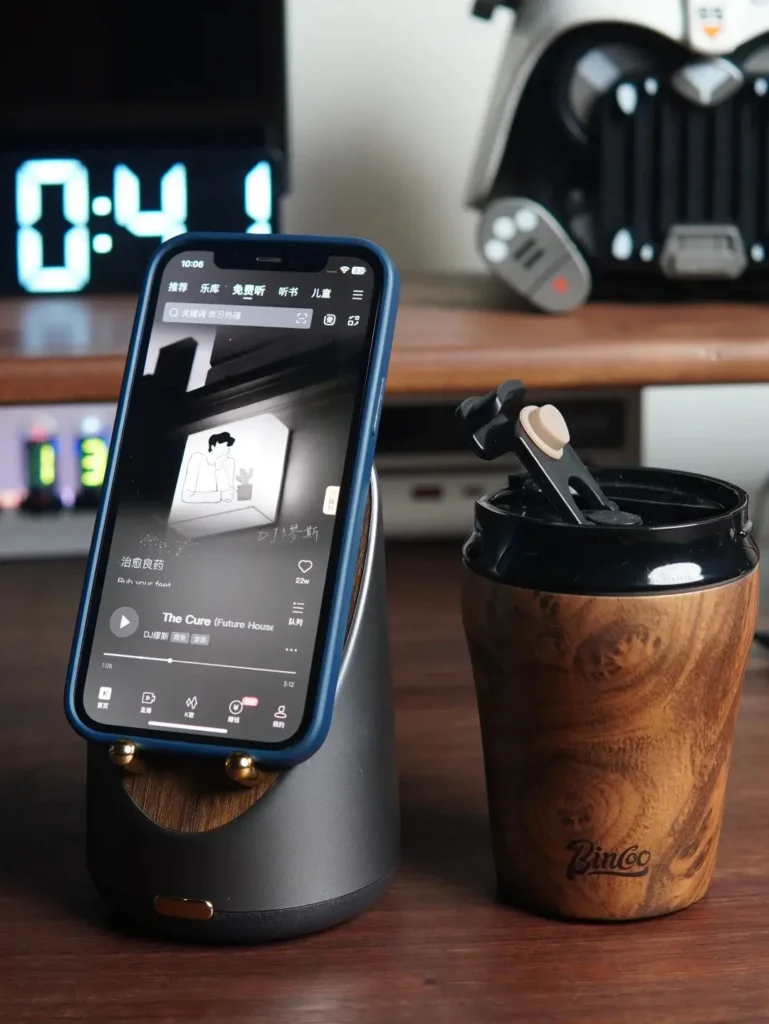
When the most popular swag items are the right choice
Choose popular when any of these are true:
1) You’re sending to a broad audience
If recipients vary by age, role, geography, or seniority, popular staples reduce mismatch. You’re essentially minimizing “wrong gift” outcomes.
2) You need scale and consistency
If you’ll run this program quarterly (onboarding, recurring events, recognition), popular items are easier to standardize:
- fewer returns/replacements
- more predictable inventory
- simpler procurement
3) Distribution needs to be painless
Popular categories tend to have stable packaging, lower defect rates, and fewer “how do I use this?” questions.
4) The swag is supporting—not leading—the campaign
If your campaign’s success depends on a webinar, a product demo, or a hiring push, swag should not become the operational bottleneck.
Bottom line: popular is a risk-management decision, not a creativity failure.
When unique company swag ideas are worth it (and when they aren’t)
Unique works best when you have a defined moment and a tight recipient group.
Choose unique when:
1) It’s a milestone
- company anniversary
- major product launch
- award or recognition moment
- team achievement that deserves a “step up”
2) You’re targeting VIPs
- top customers
- strategic partners
- executive briefings
- high-intent prospects (not a cold list)
3) You have a clear theme
Unique is easiest when it answers a single question: “What problem is this gift solving?”
Examples of themes (without turning this into a product list):
- “desk reset”
- “travel ready”
- “remote upgrade”
- “winter comfort”
Avoid unique when:
- you’re shipping internationally with tight timelines
- you can’t handle replacements/returns
- you don’t have time for sampling and QA
- you’re trying to “be different” with no use case
Bottom line: unique is a planning decision. Without planning, it becomes clutter.
The hidden cost difference: operations (where swag programs win or fail)
Two items can have the same unit price and totally different total cost. Before you decide “popular vs. unique,” pressure-test the operational side.
1) Sizing complexity (the apparel trap)
Apparel can be beloved, but it introduces:
- size collection
- exchanges
- inconsistent fits across batches
- leftover inventory that can’t be reused
If you can’t run sizing smoothly, pick size-light options or make apparel optional via controlled choice.
2) Shipping risk (breakage, bulk, dimensional weight)
Unique items often fail in transit:
- fragile materials
- bulky shapes
- poor packaging availability
- higher dimensional shipping costs
Popular staples tend to be easier to ship because packaging standards are mature and defect rates are known.
3) Quality control and replacement workload
Uniqueness often comes from new suppliers or unusual materials—exactly where defects can hide:
- print adhesion issues
- weak zippers/hardware
- electronics compatibility problems
- coatings that scratch
If you can’t afford replacements (money + team time), stay closer to proven categories.
4) Storage and fulfillment
If you’re not using a fulfillment partner, ask:
- Where will this live?
- How many SKUs?
- Who assembles kits?
- How many labor hours per 100 shipments?
Popular items usually allow you to simplify SKUs. Unique programs often multiply SKUs.
A simple decision rubric (use this to avoid internal debates)
Score each swag concept from 1–5 on the criteria below. Then choose based on what matters most for the project.
Core criteria (1–5)
1) Utility — Will recipients use it weekly?
2) Longevity — Will it still look good after 3 months of use?
3) Audience fit — Is it appropriate for the recipient group?
4) Brand compatibility — Does subtle branding still look good?
5) Distribution ease — Can you ship it reliably and affordably?
6) Risk — Defect rate, returns, replacements, compliance concerns
How to interpret the score
- If Distribution ease + Risk score low, “unique” becomes expensive quickly.
- If Utility + Longevity score low, it’s not swag—it’s waste.
- If Audience fit is uncertain, default to popular staples or offer controlled choice.
This rubric is the fastest way to keep stakeholders aligned without turning the process into taste arguments.
How to be “unique” without being gimmicky
If your team wants unique swag ideas but you still need safety and professionalism, use these principles:
Principle 1: Make the uniqueness about curation, not weirdness
A cohesive kit with a clear use case feels unique—even if the items are familiar.
Principle 2: Upgrade one detail people can feel
Uniqueness can come from:
- better materials
- better finish
- better packaging
- better usability
People remember quality more than novelty.
Principle 3: Keep branding understated
The more unique the item, the more recipients want it to feel like a real object—not an advertisement. Subtle branding increases use, which increases real brand exposure.
Principle 4: Limit variables
Unique programs fail when there are too many:
- too many SKUs
- too many personalization options
- too many packaging components
Start with one concept, execute it well, then iterate.
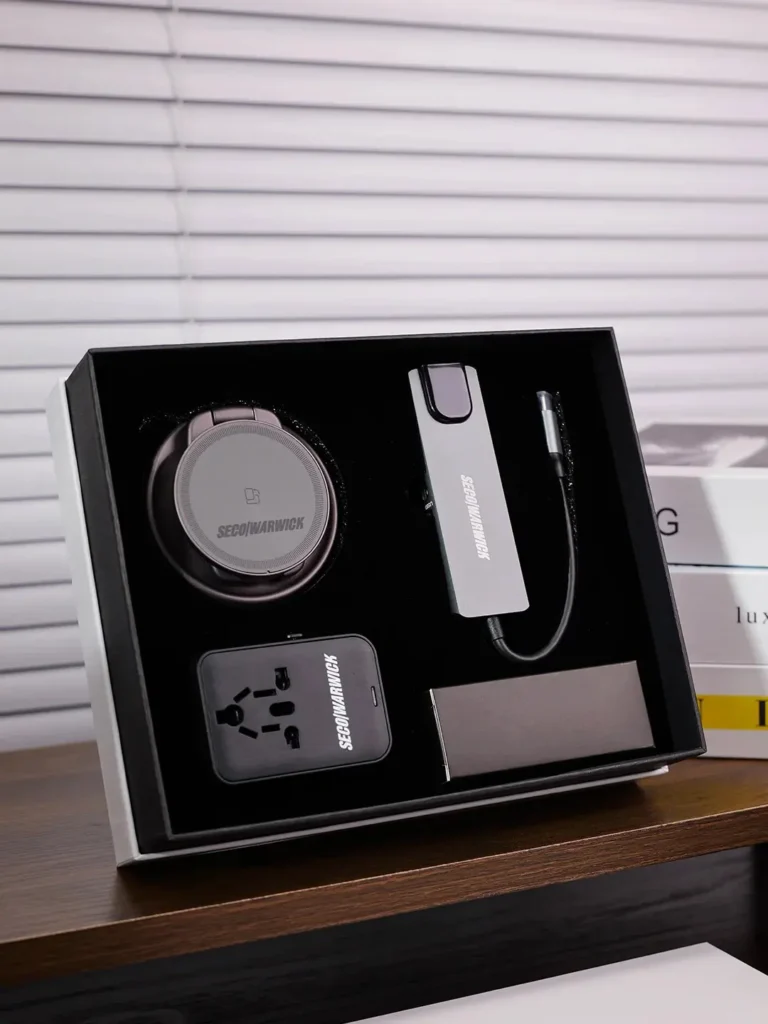
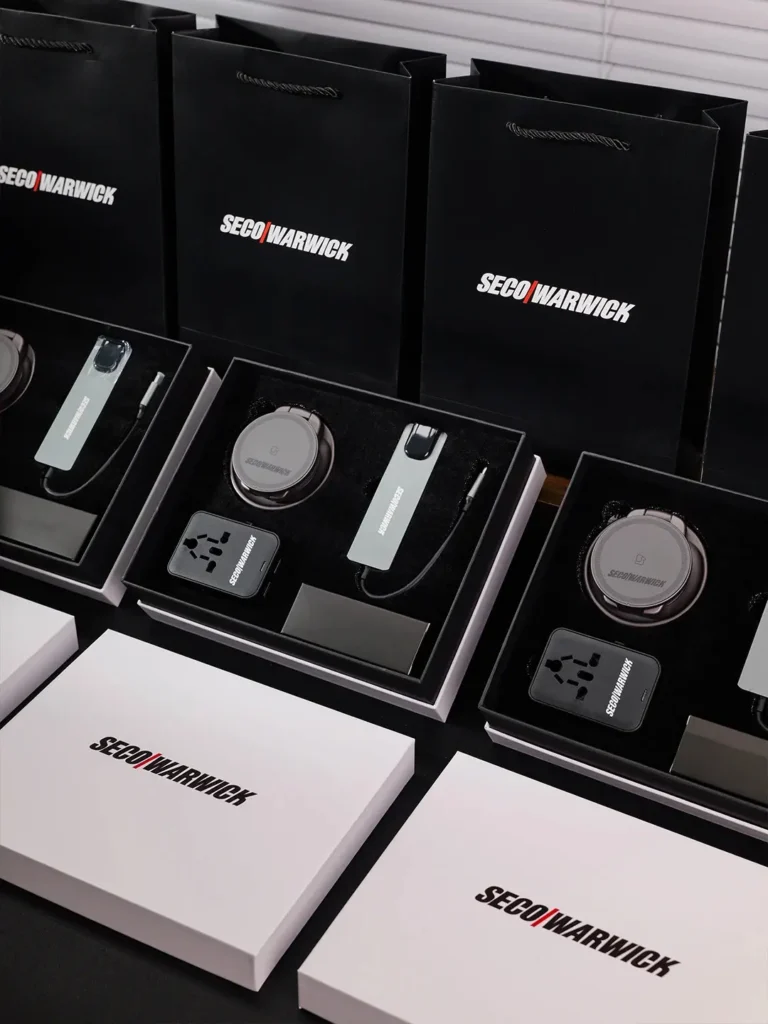
A balanced approach that works for most companies
If you’re building a repeatable swag program (not a one-off stunt), a simple portfolio approach is usually best:
- 70–80%: popular, reorderable staples (stable supply, low risk)
- 20–30%: unique “moment gifts” (milestones, VIPs, standout campaigns)
This prevents “same old swag” fatigue without turning every shipment into a custom project.
Where to go next
This buyer’s guide is about choosing the strategy. For execution-ready lists by audience, use:
- Company swag ideas for employees
Best for onboarding, appreciation, offsites, and internal programs. - Company swag ideas for clients
Best for professional gifting, policy-safe choices, and relationship moments. - What does company swag mean?
Best for definitions, business context, and a high-level view of common swag categories.
FAQ
Are the most popular swag items always the best?
They’re the safest when you need broad appeal and smooth logistics. “Best” depends on your moment and audience.
What makes unique company swag ideas actually work?
A clear use case, strong quality control, and easy distribution—plus restrained branding.
Should I choose popular or unique for my program?
For ongoing programs, build around popular staples and reserve unique for milestone moments or VIP audiences.




 English
  Español
  Français
  العربية
  Italiano
  Deutsch
  日本語
日本語  Nederlands
  Svenska
  Norsk bokmål
  Dansk
Dansk  Suomi
Suomi  한국어
한국어  Ελληνικά
  עִבְרִית
  Română
  Türkçe
  Русский