
Employee gifting is one of those things that sounds easy until you try to do it well for 80, 300, or 1,500 people.
At scale, the gift isn’t the challenge. The challenge is fairness, delivery, and all the little failure points that turn a nice gesture into a support inbox fire. People won’t be dramatic about it, but they’ll notice: who got what, who got it late, who didn’t get it at all, and whether remote employees were treated like a rounding error.
This guide is about building a gifting program that feels human—while still being operationally sane.
Start with the moment (not the merch)
A gift means different things depending on why it’s happening. If you don’t name the moment, you’ll compensate with “more items,” and the box will still feel oddly empty.
Onboarding
Onboarding gifts are not “celebration.” They’re orientation.
- Best when it arrives week one
- Best when it helps someone feel equipped on day one
- Branding should be quiet and confident, not “welcome to the fandom”
Milestones (anniversaries, promotions, project wins)
Milestone gifts are about being seen.
- Reference the milestone plainly
- Avoid inside jokes unless you’re genuinely sure it lands
- Consistency matters: missing someone hurts more than a boring gift
Team events (offsites, all-hands)
Event gifts are about shared memory, and that’s where teams overshoot.
- Pick something travel-friendly
- Keep packaging sane (people are flying home with it)
- Don’t force a “photo moment” item unless your culture is already like that
Year-end appreciation
Year-end is where delivery chaos and policy questions show up.
- Choose items that survive global shipping
- Build time buffer (late December deliveries feel like an afterthought)
- Make it easy to replace (because something will go missing)
Fairness first (because people will compare anyway)
Employees don’t compare gifts because they’re petty. They compare because they’re human—and because gifting is a signal.
Here are three fairness models that hold up in real companies:
1) Same gift for everyone (simple, predictable)
Works best for universally useful items (drinkware, notebook, tech pouch).
- Pros: easy messaging, low admin
- Cons: can feel generic if repeated every cycle
2) Same value, people choose (my go-to for morale)
Offer 2–4 options (“commute kit / home desk kit / travel kit”).
- Pros: feels fair without being expensive
- Cons: requires a clean selection process + firm deadline
3) Role-based kits (only if you can explain it cleanly)
Field teams and office teams often need different things. That’s fine—if you say it plainly.
- Pros: genuinely useful
- Cons: if you’re vague, it reads like hierarchy
One sentence that prevents 20 internal arguments: “Everyone gets something good, and everyone understands the logic.”
Company logo gifts for employees: choose items that survive real life
You’re not buying “delight.” You’re buying use. Use is what makes the gift feel like appreciation instead of inventory.
Categories that usually land well
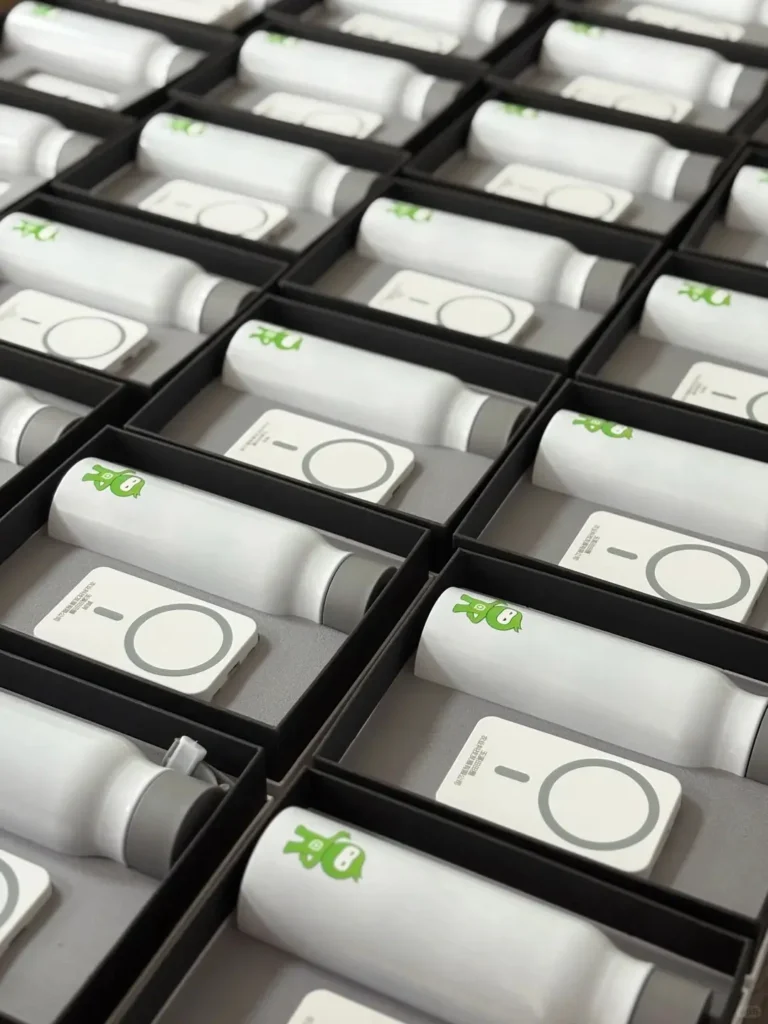
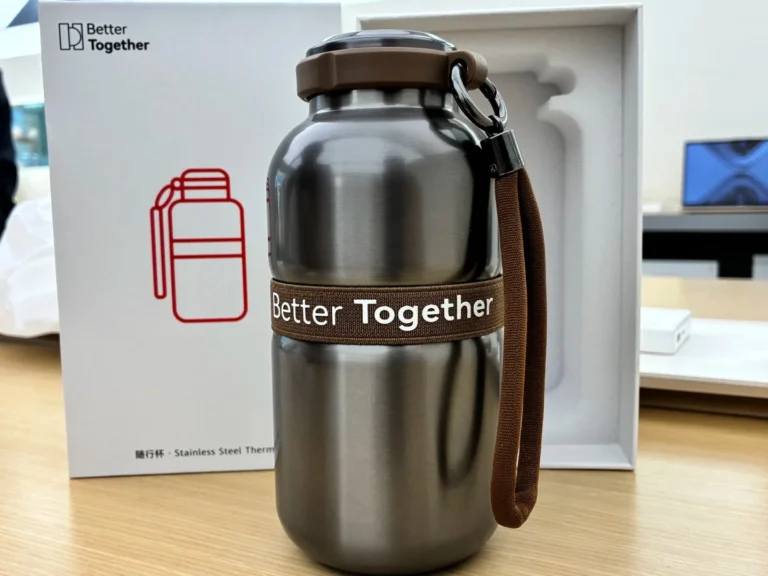
- Drinkware (it wins because it’s low-assumption and high-utility)
- Tech organization (cable kits, pouches, simple chargers—nothing too fussy)
- Workday upgrades (nice notebook, pen that doesn’t feel disposable, desk basics)
- Commute-friendly carry (only if the style is neutral and the quality is obvious)
Categories that often create support tickets (and quiet regret)
- Apparel: sizing, fit preferences, climate differences, returns
If you do apparel, treat it like a product drop: real quality, real size chart, real choice. - Strong-scent items: fragrance is personal; sensitivity is real
“Wellness” can be tea/coffee-adjacent without scent. - Fragile items: ceramics look great until they arrive as confetti
If you’re shipping to homes, fragility multiplies your workload.
A quick test: Would someone use this on a video call without feeling like a walking banner? If yes, you’re close.
Branding that people don’t feel weird about
Employee gifts aren’t client swag. The logo shouldn’t be the main character.
Branding placements that tend to work:
- small corner mark
- tone-on-tone embroidery/emboss
- underside/inside placement (bottom of bottle, inside notebook cover)
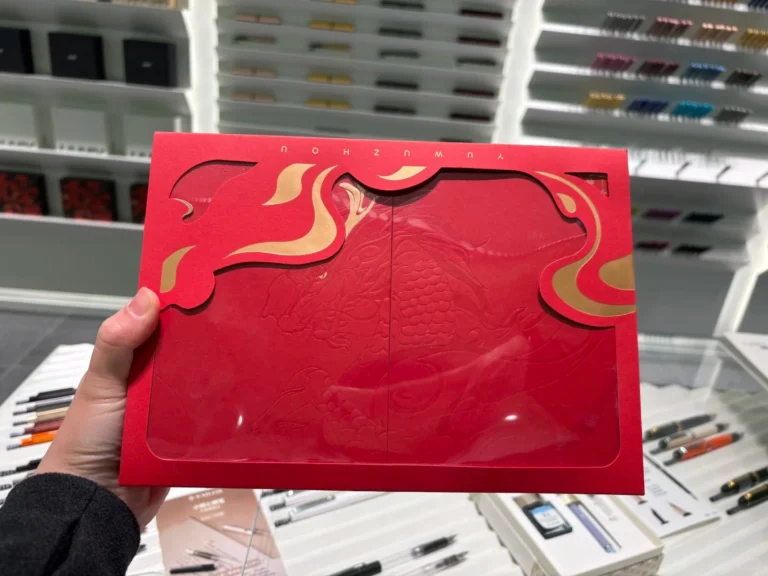
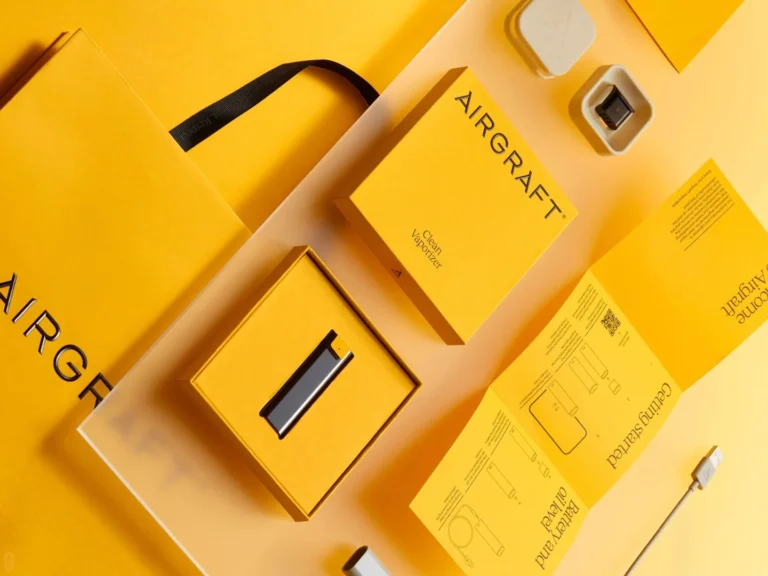
- brand message in the packaging (inside lid, insert card)
Branding that tends to get “lost” (on purpose):
- big centered logos on the hero surface
- slogans
- loud corporate colors with no restraint
If you want employees to use it, make it feel like a well-designed product that happens to be from your company.

Decide distribution before you fall in love with the gift
This is where gifting programs actually succeed or fail.
Option A: Office handout
Great if most people are onsite.
Watch-outs:
- people traveling that week
- new hires after the event
- the “leftover pile” that becomes awkward instantly
Option B: Direct-to-home shipping
Best for remote/hybrid. Also where weird stuff happens.
You’ll need:
- address collection (done respectfully)
- tracking visibility
- a replacement plan (because things get damaged or returned)
Option C: Regional hubs (hybrid approach)
Ship bulk to regional offices or 3PL hubs, then distribute locally.
Good when:
- you have multiple countries
- customs and last-mile reliability vary a lot
Practical note from the field: don’t design a giant rigid box if you’re shipping internationally. It will arrive looking like it did a semester abroad.
Address collection without making employees feel watched
This is mostly tone and boundaries.
What works:
- short form
- clear purpose (“shipping your appreciation gift”)
- clear deadline
- clear retention (“used only for this shipment; deleted after X days”)
What backfires:
- vague “we might send something” messages
- asking for extra data “just in case”
- repeated reminders that sound like collections
Keep it boring and specific. Boring is trustworthy.
Personalization: do less, do it right
Personalization is powerful, but it’s also where ops complexity grows teeth.
Low-risk personalization (high impact):
- name on the card/insert (not on the product)
- team-specific message variants
- a short leader note that references something real
Higher-risk personalization (only with clean data):
- names/initials on the item
- size selection
- color selection per person
Two classic “we didn’t think of that” problems:
- name spelling (hyphens, accents, preferred names)
- address format (APO/FPO, unit numbers, regional postal rules)
If you personalize the product, lock these:
- one approved name format
- one cutoff date (no exceptions… or it becomes all exceptions)
- buffer stock for fixes
Most of the time, the best ROI is: write a card that sounds like a human and spell the person’s name correctly.


Timing: ship first, announce second
Late gifts aren’t tragic. They’re just awkward.
If you announce “gifts are coming!” and they arrive two weeks late, you created a tiny trust problem for no reason. The safer move is boring but effective:
- ship first
- make sure most people have tracking / delivery confirmation
- then announce
Timing norms that keep you out of trouble
- Onboarding: arrives in week one
- Milestones: arrives right before or right after the announcement
- Events: in-hand before the event starts
- Year-end: earlier than you think (carriers do not care about your internal calendar)
Replacement policy: the part people remember
When a box arrives damaged, nobody thinks “logistics is hard.” They think: “So this is how much you cared.”
Keep support simple and fast:
- one alias (e.g., gifts@company.com)
- one short form (missing / damaged / wrong address)
- clear replacement window
- buffer inventory reserved for fixes (don’t spend it all on the first wave)
Three real-world failure points worth planning for:
- front desk refusal (some offices won’t accept personal packages)
- apartment access (no unit code = return to sender)
- international customs delays (especially food/liquids/batteries)
The win isn’t perfection. The win is how quickly you make it right.
A repeatable program (so you’re not rebuilding every time)
If this becomes a once-a-year scramble, it will always feel stressful. Build a small internal system instead.
A simple operating rhythm
- Name the moment (onboarding / milestone / event / year-end)
- Pick the fairness model (same / choose / role-based)
- Lock distribution (office / home / hubs)
- Confirm constraints (regions, restrictions, personalization rules)
- Write the message (card + internal announcement)
- Ship + support (tracking + replacements)
- Close out with a tiny wrap report
The wrap report (keep it humble)
Track:
- undeliverable rate
- damage rate
- top support issues
- 5 real employee quotes (the honest ones)
That’s how the program gets quieter and better every cycle.
What “good” looks like
Great employee gifting doesn’t say, “Look at our logo.” It says:
- we planned this
- we didn’t forget remote employees
- we respect your time
- we chose something you’ll actually use
- and when something went wrong, we fixed it quickly
That’s the bar for company logo gifts for employees—not flashy, just competent and genuinely considerate.

Один ответ
I love how the blog focuses on fairness when scaling gifts. It’s so true that small details like timing and whether remote employees feel included can make or break the experience. It’s also great to see that onboarding gifts are framed as part of the orientation, rather than a celebration—setting the right tone from day one.