
When people think about corporate branded merchandise, they often picture huge boxes of T-shirts, thousands of pens, or warehouse shelves filled with tote bags waiting for the next trade show. That image is not wrong, but it is no longer the whole story.
Today, many companies need something much more flexible: corporate branded merchandise international fulfillment for small batch orders, sometimes as few as 12 pieces.
It may sound unusual at first. Why would a global company need only 12 branded gifts? But in real business life, this happens more often than people expect. A team wants to welcome 12 new hires across different countries. A sales manager wants to thank 12 VIP clients after a project launch. A marketing team wants to send a small run of premium branded merchandise to partners in Europe, the US, and Asia. A founder wants to surprise a handful of investors with something thoughtful, not mass-produced.
In these moments, a small batch is not “small” in value. It can be personal, strategic, and memorable.
This article explores why small batch branded merchandise matters, how international fulfillment works, and what companies should consider when sending as few as 12 pieces across borders.
Why Small Batch Corporate Branded Merchandise Is Becoming More Popular
For years, branded merchandise was mainly about volume. The logic was simple: order more, reduce unit cost, distribute everywhere. That still works for large events and mass campaigns. But business communication has changed.
Companies now care more about relevance, timing, and emotional connection. A generic gift sent to 2,000 people may create less impact than a carefully chosen item sent to 12 people at the right moment.
Small batch corporate merchandise is especially useful when the audience is specific. For example:
- A leadership team attending a private retreat
- A group of high-value clients in different countries
- A new regional team joining the company
- Influencers or brand partners receiving a launch kit
- Board members, investors, or strategic advisors
- Internal award winners or top performers
In these cases, the goal is not broad exposure. The goal is to make someone feel recognized.
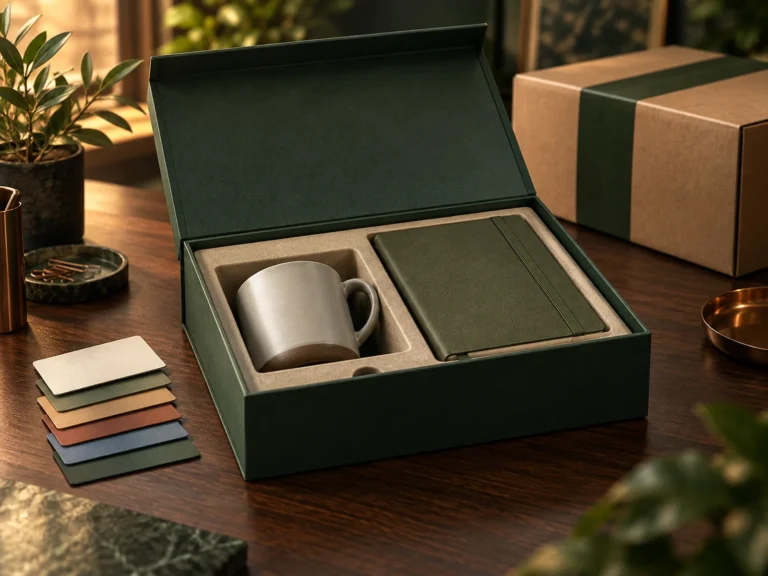
A friend of mine once worked with a software company that closed its first enterprise deal in Japan. Instead of sending a standard thank-you email, the company prepared a small gift set for the 10 people involved on the client side. Each box included a beautifully branded notebook, a local specialty snack, and a handwritten card from the account team. The total quantity was tiny, but the gesture was remembered for months. Later, during a renewal conversation, the client even mentioned the gift as an example of how thoughtful the company was.
That is the real power of small batch branded merchandise. It does not shout. It speaks directly.
What Does “International Fulfillment” Mean for Branded Merchandise?
International fulfillment means managing the process of storing, packing, shipping, and delivering products across different countries. For corporate branded merchandise, this often includes:
- Product sourcing
- Branding or customization
- Quality checking
- 패키징
- Address collection
- Customs documentation
- International shipping
- Tracking and delivery confirmation
- Handling failed deliveries or returns
For large companies, this can become complicated very quickly. Sending branded merchandise from one country to another is not the same as mailing a birthday card. There may be import duties, customs rules, product restrictions, tax issues, and courier limitations.
Even for a small batch of 12 pieces, international fulfillment requires careful planning. In fact, small orders can sometimes be more delicate than large ones because every package matters. If one of 12 VIP clients receives a damaged box, that is not just a logistics problem. It is a brand experience problem.
Why 12 Pieces Can Be the Perfect Quantity
The phrase “small batch 12 pieces” may seem oddly specific, but 12 is actually a very practical number for corporate gifting and branded merchandise.
Twelve pieces may fit situations like:
- 12 members of a board or advisory group
- 12 selected clients in different markets
- 12 speakers at an executive event
- 12 new employees in a monthly onboarding group
- 12 regional sales winners
- 12 PR contacts for a product launch
- 12 partners invited to a private brand experience
A batch of 12 allows companies to test an idea before scaling. For example, before ordering 1,000 premium branded travel pouches, a company may create 12 samples and send them to regional leaders for feedback. Or a brand may send 12 curated gift boxes to top clients and measure the response before building a wider campaign.
One marketing manager once told me, “Twelve is enough to know whether people care.” That sentence stayed with me. If 12 carefully chosen recipients respond positively, the idea may be worth expanding. If they do not, the company has learned something without wasting budget.
The Shift from Cheap Giveaways to Thoughtful Merchandise
There was a time when corporate merchandise often meant low-cost giveaways: plastic pens, stress balls, lanyards, fridge magnets. Some of these still have a place, but modern recipients are more selective.
People are surrounded by things. If a branded item feels cheap, unnecessary, or difficult to use, it may go straight into a drawer, or worse, the trash. That is not good for the brand or the planet.
Small batch branded merchandise gives companies an opportunity to choose better items because they are not forced to spread the budget across thousands of units.
Instead of 1,000 forgettable items, a company might create 12 excellent ones.
Examples include:
- A premium notebook with subtle branding
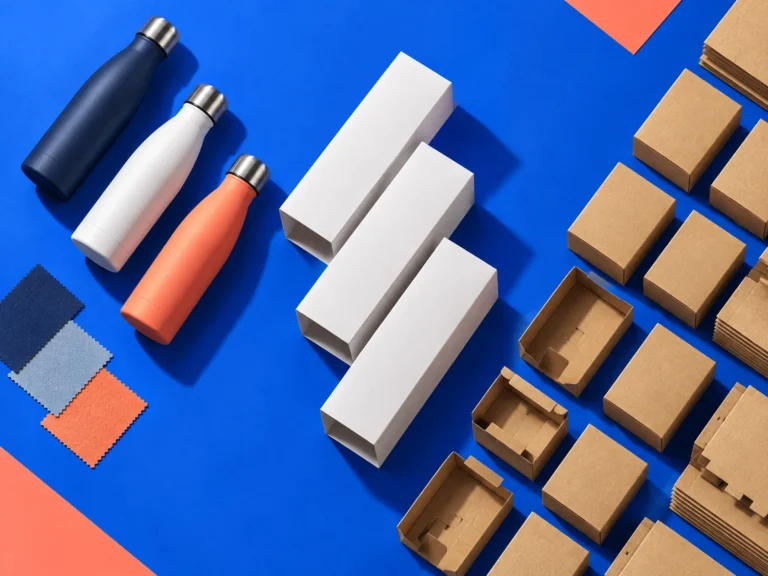
- A high-quality insulated bottle
- A custom desk object
- A small leather accessory
- A travel organizer
- A locally inspired gift box
- A limited-edition branded apparel piece
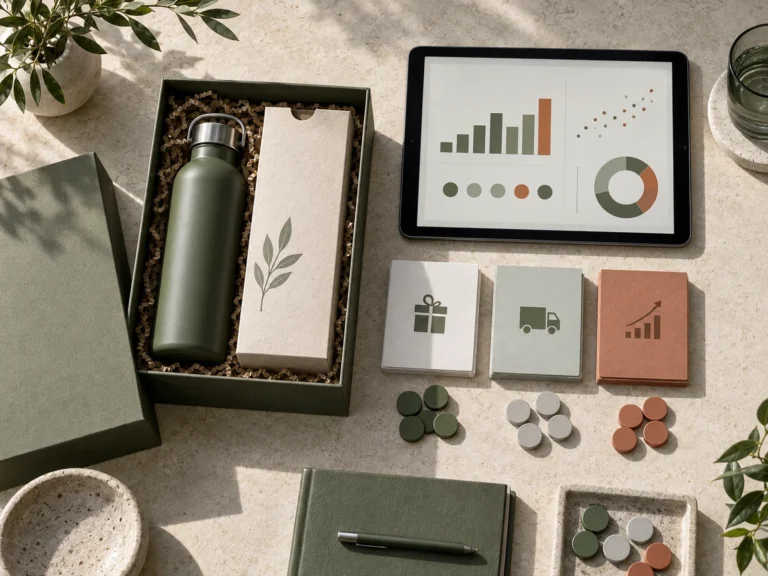
- A carefully packaged welcome kit
The best corporate branded merchandise is useful, attractive, and aligned with the company’s personality. It should feel like something the recipient would choose to keep.
Real-Life Example: The New Hire Welcome Kit
Imagine a company hires 12 people in one month. They are based in London, Berlin, Singapore, Shanghai, Toronto, and Sydney. The HR team wants each person to feel part of the same culture from day one.
A small batch welcome kit could include:
- A branded notebook
- A company hoodie or cap
- A welcome card from the CEO
- A desk item related to the company’s values
- A small local snack or coffee selection
- Login instructions or onboarding QR code
The challenge is not only making the kit look nice. The bigger challenge is getting it to every new employee on time.
This is where international fulfillment becomes essential. Each country may have different delivery timelines. Apparel sizes must be correct. Addresses must be collected securely. Customs descriptions must be accurate. Some food items may not be allowed in certain countries. If the kit includes electronics, batteries can create shipping restrictions.
A good fulfillment process prevents a warm welcome from turning into a frustrating experience.
For the employee, receiving the kit at home can be surprisingly meaningful. Starting a remote job can feel lonely. A physical package on the desk says, “You are part of us now.” That feeling is hard to create through another onboarding email.
Real-Life Example: VIP Client Appreciation
Small batch branded merchandise is also powerful for client appreciation.
Let’s say a design agency completes a major project for a luxury automotive brand. The team wants to thank 12 client stakeholders across Germany, China, the UK, and the US. A generic gift would feel lazy. A highly personalized gift would feel more appropriate.
The agency could prepare a refined gift set:
- A minimal branded card
- A premium object related to mobility or design
- A small booklet showing project highlights
- A personalized thank-you note
- Elegant packaging with subtle brand elements
Here, the merchandise is not just a “gift.” It becomes part of the relationship. It reminds the client of the collaboration, the shared effort, and the quality of the work.
But international fulfillment matters again. If the package arrives late, damaged, or with customs fees charged to the recipient, the positive feeling can quickly disappear. For VIP gifting, the recipient should not have to solve logistics problems.
That is why companies should think beyond the product. The delivery experience is part of the gift.
Key Challenges in International Fulfillment for Small Batch Merchandise
Sending 12 pieces internationally may sound simple, but several issues can appear.
1. Customs and Import Duties
Different countries have different customs rules. A branded notebook, a T-shirt, and a food item may all be treated differently. Some countries require detailed product descriptions, HS codes, declared values, and country of origin.
If documents are incomplete, packages may be delayed or returned.
2. Shipping Costs
For small batch orders, shipping cost per item can be high. There are fewer units to spread the cost across. This is why planning matters. Sometimes it is more efficient to ship all products to one fulfillment hub. Other times, local production or regional fulfillment may be better.
3. Product Restrictions
Certain products are difficult to ship internationally, including:
- Liquids
- Batteries
- Food
- Cosmetics
- Alcohol
- Some textiles or leather goods
- Items made with wood or plant materials
A gift box may look simple, but one restricted item can delay the entire shipment.
4. Address Accuracy
International addresses can be tricky. Some countries use postal codes differently. Some require local language formatting. Apartment numbers, phone numbers, and company names may be essential for delivery.
For only 12 recipients, every address should be checked carefully.
5. Brand Consistency
When sending merchandise to multiple countries, companies must make sure every recipient receives the same level of quality. Packaging, color, print quality, and inserts should feel consistent.
A premium brand cannot afford inconsistent presentation.
6. Timing
International delivery times vary. Sending to major cities is usually easier than sending to remote locations. Customs clearance can also affect timing. If merchandise is connected to an event, launch, or employee start date, build in extra time.
How to Plan a Small Batch International Fulfillment Project
A successful small batch project starts with clear planning. Here is a practical workflow.
Step 1: Define the Purpose
Before choosing a product, ask:
- Who is receiving it?
- Why are they receiving it?
- What feeling should it create?
- Is this a thank-you, welcome, celebration, launch, or test campaign?
A gift for new employees should feel different from a gift for investors.
Step 2: Choose Products That Travel Well
For international fulfillment, choose items that are durable, lightweight, useful, and not restricted.
좋은 옵션은 다음과 같습니다:
- 노트북
- 의류
- Tote bags
- Desk accessories
- 여행 주최자
- Metal bottles, depending on destination
- Printed cards or booklets
- Small non-fragile premium items
Avoid fragile, heavy, perishable, or highly regulated products unless you have a strong logistics plan.
Step 3: Keep Branding Subtle
For premium merchandise, subtle branding often feels more elegant. A small logo, embossed detail, custom color, or thoughtful message can be more effective than a large logo printed across the item.
People are more likely to use branded merchandise when it fits naturally into their daily life.
Step 4: Prepare Accurate Recipient Data
Collect:
- Full name
- Company name if applicable
- Full address
- Postal code
- 국가
- Phone number
- Preferred delivery language if needed
For data privacy, especially in international projects, handle recipient information carefully.
Step 5: Confirm Customs Details
Prepare:
- Product description
- Material
- 수량
- Unit value
- Country of origin
- HS code if required
- Purpose of shipment, such as corporate gift or sample
Never describe everything vaguely as “gift.” Customs authorities often need specific details.
Step 6: Decide Who Pays Duties and Taxes
For VIP recipients, it is usually better to ship DDP, which means duties and taxes are handled by the sender where possible. If the recipient has to pay import fees, the gift may feel like a burden.
Step 7: Track Every Shipment
For 12 pieces, there is no excuse for losing visibility. Track each package and confirm delivery. If something goes wrong, respond quickly.
Small Batch Does Not Mean Low Effort
One mistake companies make is treating small orders as casual. “It’s only 12 pieces” can become an excuse for weak planning. But for the recipient, there is no such thing as “only one package.” Their package is the entire experience.
If a senior client receives a poorly packed item, they do not think, “Maybe the other 11 were fine.” They judge the brand based on what arrived at their door.
Small batch orders often involve important people. That means the standard should be higher, not lower.
Sustainability and Small Batch Merchandise
Another reason small batch corporate merchandise is growing is sustainability. Companies are becoming more cautious about overproduction. Ordering thousands of items without knowing whether people want them can lead to waste.
Small batch production allows teams to:
- Test demand
- Reduce leftover stock
- Choose higher-quality products
- Personalize gifts
- Avoid unnecessary mass giveaways
- Support more responsible purchasing
A smaller quantity can also encourage better design. When every item has a purpose, companies tend to choose more carefully.
Sustainability is not only about materials. It is also about relevance. A useful product that someone keeps for years is more sustainable than an eco-labeled item that nobody uses.
What Makes a Good Small Batch Merchandise Partner?
If you are looking for a supplier or fulfillment partner, especially for international projects, look for more than product catalogues.
A good partner should understand:
- Small batch customization
- International shipping requirements
- Packaging design
- Customs documentation
- Corporate brand standards
- Data handling
- Premium gifting expectations
- Timelines and event deadlines
They should be comfortable handling a 12-piece order with the same seriousness as a 1,200-piece order.
Ask practical questions:
- Can you ship to multiple countries?
- Can you handle individual addresses?
- Can you provide tracking for each package?
- Can you advise on customs restrictions?
- Can you support branded packaging?
- Can you manage small batch personalization?
- What happens if a package is delayed or returned?
The answers will tell you whether they are simply selling products or actually managing fulfillment.
피해야 할 일반적인 실수
Here are a few mistakes companies often make with small batch international fulfillment.
Choosing Products Too Late
Custom merchandise takes time. Production, branding, packing, and shipping all need planning. Start early.
Ignoring Customs Rules
A beautiful gift that gets stuck at customs is not a successful gift.
Overbranding the Product
If the logo is too large, recipients may not use the item. Think about what they would actually keep on their desk or carry in public.
Forgetting the Unboxing Experience
Packaging matters. A premium item in poor packaging loses impact.
Sending Without Tracking
International shipping without tracking is risky, especially for high-value recipients.
Making the Recipient Pay Fees
Unexpected customs fees can ruin the gesture. Clarify duties and taxes before shipping.
The Future of Corporate Branded Merchandise Is More Personal
The future of corporate branded merchandise is not only bigger campaigns. It is smarter campaigns.
Companies will continue to use large orders for events, retail activations, and global marketing. But small batch fulfillment will become increasingly important for high-touch moments: onboarding, executive gifting, partner appreciation, pilot campaigns, and limited-edition brand experiences.
A thoughtful package sent to 12 people can create more conversation than a generic giveaway sent to 1,200.
In a world where most communication happens through screens, a physical item can feel surprisingly human. It has weight. It arrives at someone’s door. It can sit on a desk, travel in a bag, or become part of a daily routine.
That is why small batch corporate branded merchandise matters.
Not because it is large in quantity, but because it is precise in intention.
최종 생각
Corporate branded merchandise international fulfillment for small batch 12 pieces is not just a logistics service. It is a way for companies to build relationships across borders with care and attention.
Whether you are welcoming a remote team, thanking VIP clients, testing a new merchandise concept, or preparing a limited-edition brand gift, small batch fulfillment gives you flexibility without losing quality.
The key is to plan carefully:
- Choose useful, travel-friendly products
- Keep branding tasteful
- Prepare customs documents properly
- Protect the recipient experience
- Track every shipment
- Work with a partner who understands international fulfillment
Small batch does not mean small impact. Done well, 12 pieces can be enough to tell 12 people: you matter.

 English
  Español
  Français
  العربية
  Italiano
  Deutsch
  日本語
日本語  Nederlands
  Svenska
  Norsk bokmål
  Dansk
Dansk  Suomi
Suomi  한국어
한국어  Ελληνικά
  עִבְרִית
  Română
  Türkçe
  Русский
4개의 응답